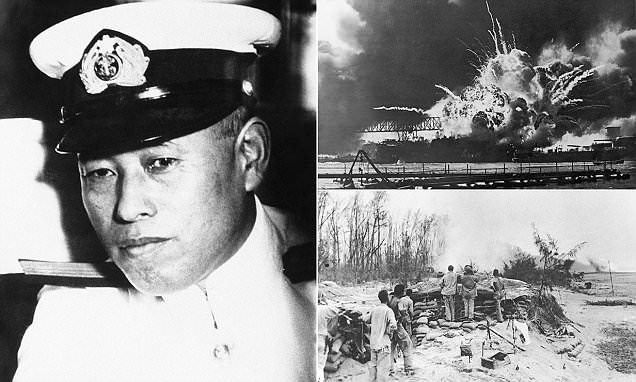
Fourteen supremely high ranking officers who paid the ultimate sacrifice in the Second World War due to wounds suffered in battle, suicide, execution or by accident. Here, we outline their military careers, the circumstances of their deaths and the legacies they left behind.
Zhang Zizhong
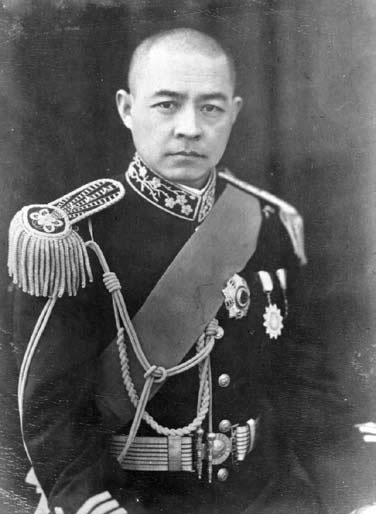
Zhang Zizhong was a National Revolutionary Army Yiji shangjiang who was awarded his final rank posthumously – the rank equivalent to an OF-9 in NATO’s officer ranking – aka a 4-star general. He died fighting valiantly in the thick of battle.
Zizhong joined the army in 1914 and served in both there plus a number of government positions in the run-up to the Japanese invasion, launched in 1937.
Zizhong took command of the 28th Army in 1938 before rising to command the 33rd Army Group by 1940. In that same year, the Japs launched their Zaoyang-Yichang Campaign, aimed at taking control of the Yangtze River and cutting off supplies to Chongqing. On May 1st, four Japanese army divisions attempted to encircle the 31st Army Group in a pincer movement. As the Chinese positions began to buckle, Zizhong tried to relieve the 31st in a counter-attack in which he personally led the 74th Division. Under pressure, the Japs rallied and pushed back Zizhong’s troops. The general was shot six times and, before he could take his own life with his pistol, the enemy broke into his command bunker and killed him with grenades and bayonet.
Zizhong was posthumously promoted, like many in this list, and went on to be venerated as a national hero. Zizhong County and numerous streets were renamed in his honour. Zizhong is remembered for his charismatic and courageous leadership.
Italo Balbo
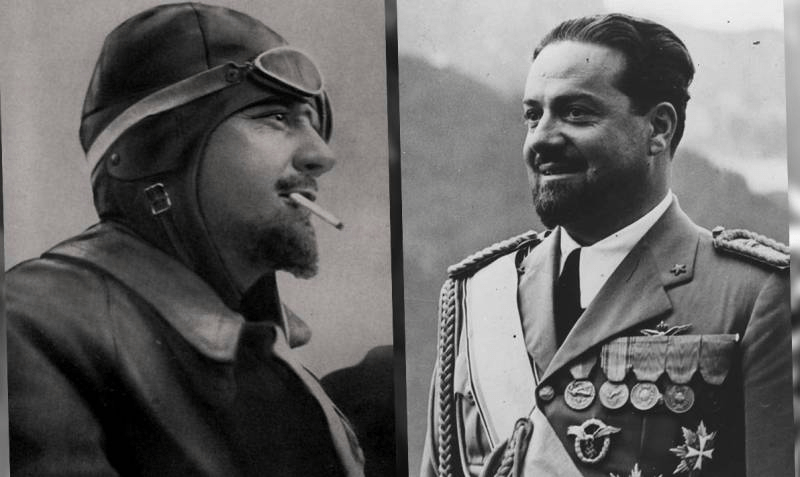
Italo Balbo was a Regia Aeronautica Maresciallo dell’Aria (Marshal of the Air), equivalent to an OF-10 officer. Balbo died when his aircraft was shot down by friendly fire.
Balbo was an important figure in Benito Mussolini’s National Fascist Party that came to power in 1922. Balbo had also served with distinction in the army during WWI and, after a crash course in aviation, was promoted to General of the Airforce in 1928. Balbo built up the fledgling airforce and led a number of ‘air cruises’, including an eight-legged Rome-to-Chicago flight in 1933. Balbo was tasked by Mussolini with taking Italy’s colonial ambitions under his wing as Governor of Libya from 1933, and was appointed North African Commander-in-Chief once WWII got underway.
Two weeks after war was declared on June 28th, 1940, Balbo was flying into the airfield at Tobruk in a Savoia-Marchetti SM.79. The airfield had just suffered a British air attack and its defenders were still on edge when Balbo’s aircraft approached. The cruiser San Giorgio opened fire first followed by the airfield’s gunners and the aircraft crashed, killing all on board.
Balbo was replaced as Governor-General of Libya and Marshal of the Airforce by Rodolfo Graziani and Mussolini, respectively. At just 37 when he died, many considered Balbo the most viable successor to Il Duce; indeed, some have suggested that Balbo’s shooting down was no accident as Mussolini may have seen him as too strong a rival, but this view has not prevailed. Balbo was remembered as a gallant aviator. A road in Chicago is named after him.
Dmitry Pavlov
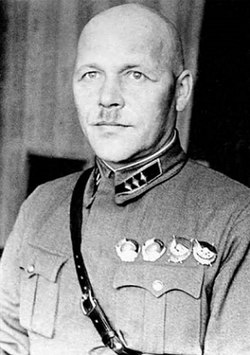
Dimitry Pavlov was a Red Army General of the Army, equivalent to an OF-9 officer, and the commander of the Western Special Military District. He was executed for incompetence.
Pavlov had served in WWI and fought in the civil war before joining the Red Army in 1919. In 1928, Pavlov graduated from the Frunze Military Academy on his path towards high command. In the intervening years, Pavlov commanded a number of mechanised and armoured units. He gained prized experience leading a Republican armoured brigade during the Spanish Civil War; this may explain why he survived Stalin’s purge of the Russian Army’s officer corps prior to WWII – a purge in which 13 out of 15 army commanders were either dismissed or executed. In 1940, Pavlov took command of the Western Front and, in Feb, 1941 was promoted to General, four months before Germany’s invasion.
Russia’s defence against Germany’s invasion – Op. Barbarossa – was catastrophic, and considering Pavlov’s Western Front took the brunt of the invasion, particularly so for him. Within days, the Wehrmacht encircled four of Pavlov’s five armies within two pockets and the Russians lost 420,000 troops. With this failure, Pavlov was arrested and charged with treason. Although these charges were downgraded to cowardice and incompetence, the punishment was death, carried out on July 27th, 1941.
In hindsight, Pavlov could’ve done more to halt the enemy, but to place him responsible for Russia’s early defeat is extremely unfair. Pavlov was rehabilitated in 1956 when he was acquitted of all charges due to lack of evidence. Then in 1965, the title of Hero of the Soviet Union, and other honours, was posthumously returned to him.
Tom Phillips
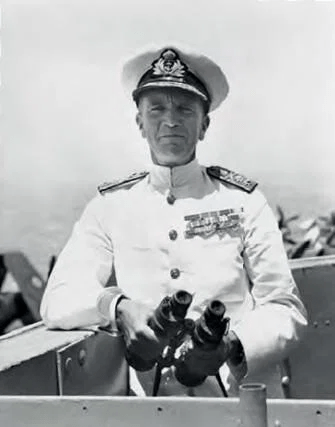
Sir Tom Phillips was a Royal Navy Admiral, equivalent to an OF-9 officer. He was killed when his ship was sunk in an air attack.
Philips joined the Royal Navy in 1903. Although he had some experience of serving on destroyers in the decades leading up to WWII, Philips had much more experience as a ‘desk admiral’, particularly as he rose up the senior ranks. The admiral was known to be smart, self assured and hardworking, yet lacked the experience of commanding warships.
With the outbreak of hostilities between the Japanese and Western empires on December the 7th, Japanese forces swept south, down the Malay peninsula towards the supposed naval bastion of Singapore. Philips was placed in command of Force Z, a micro-fleet consisting of a battlecruiser, several destroyers but headed up by the top-of-the-range Battleship HMS Prince of Wales. Compelled to use his ships gallantly in support of hard-pressed troops in Malay, Philips sailed up the eastern coastline in order to intercept Japanese landings. Yet, the man underestimated – like so many others – the power of naval air attacks and, when the moment came, no aircover arrived to defend his squadron. Just three days beyond Japan’s Pearl Harbor attack, Force Z was spotted and attacked relentlessly with the Prince of Wales stricken by one bomb and four torpedo hits. Although most of the ship’s company were rescued, Philips and the ship’s captain went down with the ship.
Philips was replaced as Commander of the Eastern Fleet by Admiral Sir James F. Somerville. History may not remember him in the best light, yet Philips died upholding the best traditions of the Royal Navy.
Isoroku Yamamoto
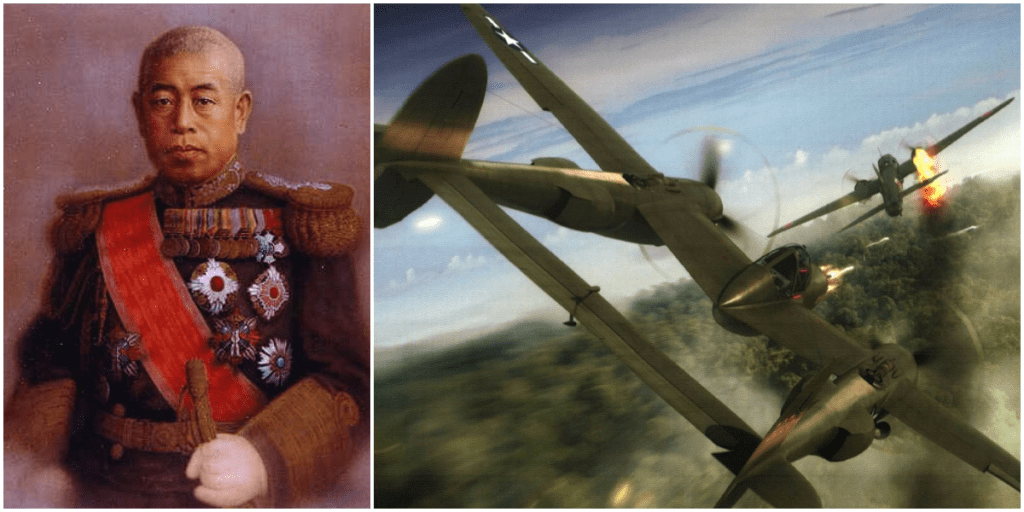
Isoruku Yamamoto was an Imperial Japanese Navy Gensui-kaigun-taishō (Marshal-admiral of the Navy) , equivalent to an OF-10 officer. He died when his plane was shot down by US fighter-aircraft.
Starting out his naval career in 1904, Yamamoto fought in the Battle of Tsushima then studied in the USA and was posted as naval attache there in the decades before war broke out where he came to realise that the USA had the industrial capacity to build up an unstoppable navy. The only chance Japan’s navy had at defeating it was to knock out the enemy quickly before it could grow. Yamamoto was placed in command of the Combined Fleet and the stunning sneak attack on Pearl Harbor was his baby.
By 1943, the Japanese had suffered the Battle of Midway reverse and, by April 1943, Yamamoto was resisting the US island-hopping campaign around Guadalcanal and it was now that US codebreakers discovered his flight plan-itinerary. On the 18th, Yamamoto set off from Rabaul on a 400 mile flight to Balalae on board a G4M medium bomber converted to carry passengers, escorted by six A6M ‘Zero’ fighters. Eighteen P-38G ‘Lightning’ interceptors pounced on Yamamoto’s flight, shooting down both bombers and killing the Admiral.
Yamamoto was replaced by Admiral Koga Mine’ichi. His death was a shattering blow to Japanese morale with one million mourners drawn to his state funeral.
Lesley James McNair
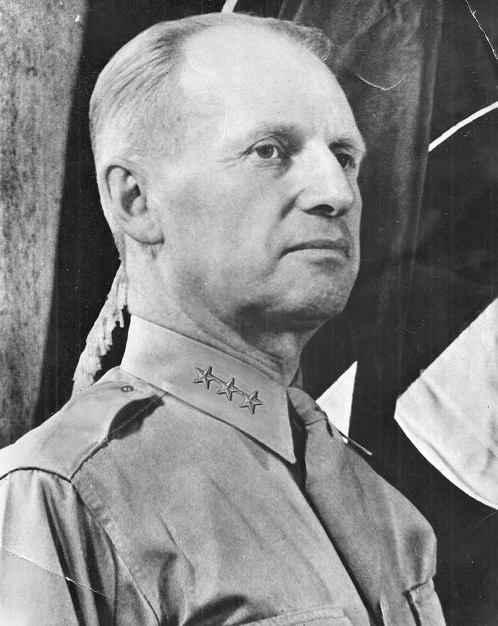
Lesley McNair was a United States Army General, equivalent to an OF-9 officer. NcNair was killed in a ‘friendly fire’ bombing run.
Graduating from West Point Military Academy in 1904, McNair’s early career saw him develop immense technical expertise in artillery and he became noted for being a generally first-class leader and officer. He served in WWI where he was promoted to Brigadier General at 35 – the 2nd youngest general in the army. By 1942, McNair was assigned command of Army Ground Forces – a huge amount of responsibility for a Lieutenant General.
In 1943, the General was wounded observing front line troops in action in Tunisia – an omen for things to come. In 1944, McNair was in France during Operation Cobra, again observing troops in action. In a radical attempt to use heavy bombers in support of ground operations on the 25th of July, Eighth Air Force bombers were supporting these troops yet errant bombs hit the 120th Division’s positions where McNair was killed, together with 100 other US troops.
McNair is remembered as the ‘Brains of the Army’ whose core methods of individual and unit training remain with the army today.
Erwin Rommel
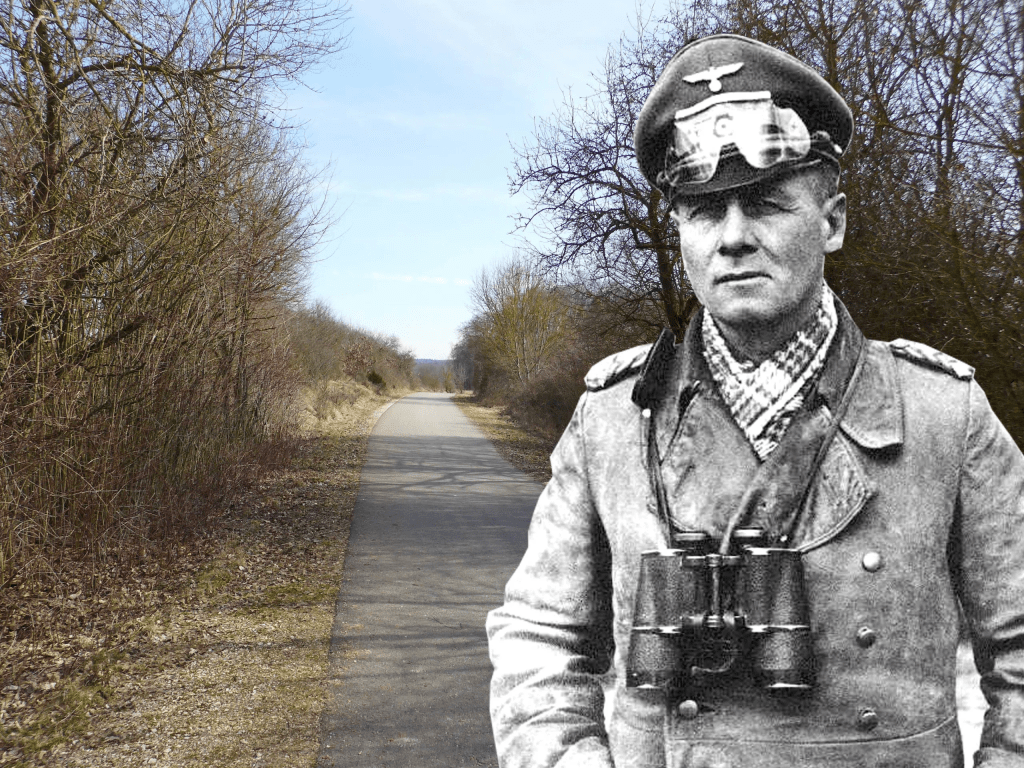
Arguably the most famous name on this list, Erwin Rommel was a German Army Generalfeldmarschall, equivalent to an OF-10 officer. He was forced to commit suicide.
Rommel joined the army in 1910 and fought in WWI where his aggressive tactics and initiative earned him the Iron Cross, 2nd Class and Pour le Merit medals. In the interwar years, Rommel earned a reputation as an outstanding instructor and innovator of infantry tactics and he entered the war in command of Hitler’s escort battalion. With his capabilities clearly recognised, Rommel was given command of the Africa Corps where he terrorised British Commonwealth forces with his massed tank formations and the use of ‘eighty-eight’ cannons as tank killers.
After returning to Europe, Fieldmarshal Rommel was given command of the Atlantic coastal defence forces. Back in Berlin, however, an assasination attempt on Adolf Hitler had gone awry, so now heads would roll. One general, von Stülpnagel, deliriously implicated Rommel in the plot. Hitler therefore sent two generals to Rommel’s residence with an offer: He could stand trial and almost certainly be condemned, shot, his family punished and close army staff-officers shot also, or Rommel could swallow a cyanide pill, his death be recorded as natural and he be buried with full military honours. On the 14th of October 1944, in the back seat of a car down a quiet lane, Rommel’s life ended.
Hitler kept his promise to bury Rommel as a hero of the Nazi state because the truth that he was executed for apparent treason would have rocked morale amongst the army’s rank-and-file. Dubbed the ‘Desert Fox’, Rommel earned an inordinate amount of respect amongst the British high command. He was remembered for his plucky, gallant fight in the Sahara with limited resources and Rommel’s standing was epitomised by Churchill who once stated: “We have a very daring and skillful opponent against us. And may I say across the havoc of war, a great general.”


Leave a Reply