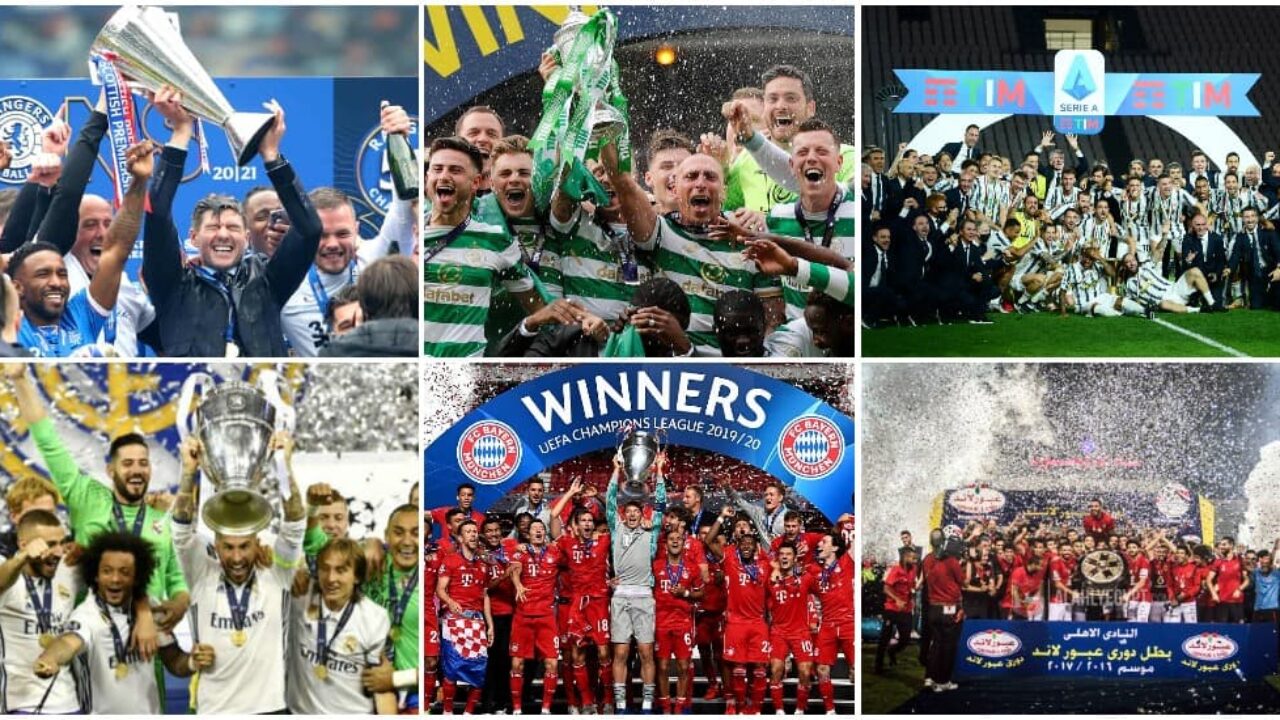
The ranking system to define, once and for all, the most successful clubs in European Men’s Football leagues (last updated: 2025)

Any club which thinks it deserves the label ‘big’ should be playing in the top league of its association, buying the best players and, ideally, holding down a global brand presence. Yet, it’s the trophy cabinet which really sorts the economy class clubs from the business class, or even private jet set.
Whilst round-robin format league championships are arguably the most important trophies to win, a huge amount of glory can be earned in knockout format ‘cup’ competitions and some clubs have built up massive fan bases from cup wins alone.
Winning the top tier league championship by playing every club in that league both home and away is regarded as the most empirical method of proving which club has the best squad in the whole country. Knockout cup competitions bring challenges of their own, however. The league is a marathon whereas the cup is more like the 400m hurdles – each game the winning team needs to have the confidence, ambition and inner steel to come away with a result after 90 minutes – that isn’t needed in every league game. This is why cups are so loved by fans; each trophy proves their team is, if not the best in the country, at least has a champion’s mindset.
Concept – This quantified ranking system is designed to compare how successful each European men’s football club has historically been within their domestic league system. It also allows for a cross comparison between all of UEFA’s biggest clubs.
Criteria – This success ranking system scores points to clubs based on which trophies and how many they have won. Only ‘competitive football’ trophies are considered. Different trophies score different points based on a ‘glory’ criteria shown below:
- How many games need to be played in order to win the trophy? More games equals a greater chance that quality, not luck, will be relied on to win the competition. It is also more likely that the quality of the whole squad will be relied upon rather than just the best starting 11.
- What do teams need to do in order to qualify for the competition? Must they already be proven winners to have a shot at the trophy or just one of hundreds of clubs? What is the quality of football likely to be?
- How prestigious is it? This is an opaque factor but is affected by things like how old it is, how many cultural links to the fan base it has, how much publicity it gets affecting things such as media rights financial rewards. Although the national leagues and cups of nations such as England, Spain, Italy and Germany carry a huge amount of prestige, the more international it is, under UEFA or FIFA, the more prestigious it generally becomes.
| Competition | Success Points |
| Domestic ‘Super Cup’ Not counted for leagues 6-56 of the UEFA Coefficient Ranking | 2 |
| UEFA Super Cup | 4 |
| Intercontinental Cup / Annual FIFA Club World Cup / FIFA Intercontinental Cup | 6 |
| League Cup -4 points for leagues 6-10 Not counted for leagues 11-56 of the UEFA Coefficient Ranking | 8 |
| UEFA Conference League | 8 |
| National Cup -4 points for leagues 6-10, -8 points for leagues 11-20, Not counted for leagues 21- 56 of the UEFA Coefficient Ranking | 10 |
| UEFA Cup / Europa League | 12 |
| UEFA Cup Winners Cup | 13 |
| Quadrennial FIFA Club World Cup | 15 |
| UEFA European Cup / Champions League | 17 |
| Top-tier League Championship -4 points for leagues 6-10, -8 points for leagues 11-20, -12 points for leagues 21-56 of the UEFA Coefficient Ranking | 18 |
The grading rationale is explained below:
Domestic ‘Super Cup’
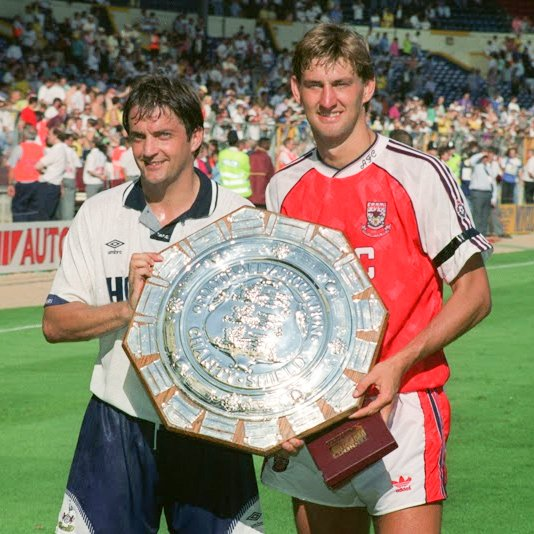
Called the FA Community Shield (CS) in England, but generally referred to as the ‘Super Cup’ (SC) in most countries, this is an exhibition competition which opens the new season. The friendliest and least important of ‘competitive’ competitions, the SC is a nice start to the season when players are still blowing the cobwebs out. This annual game usually has the two best teams in the country playing for it, having shown a winning mentality the previous season. This scores 2 points.
Min number of games: 1-2
Qualification: Typically the Top-Tier League Championship winner and National Cup winner – two of the best teams in the country.
Prestige: Seen as a friendly by many fans, yet games are often played out between big rivals. Notable games are Man United’s 3-2 comeback against rising giants and arch enemy Man City in 2011 or Athletic Bilbao’s 2 legged underdog victory against titans Barcelona in 2015; managing 4 goals without reply at the Nou Camp, Athletic came away with their first trophy in decades. England’s Community Shield (CS) has been running since 1908 yet for other SCs many were founded in the ’70s or ’80s.
UEFA Super Cup
Another nice little curtain raiser that reminds everyone the two clubs facing off have bragging rights, if only for the moment. It’s an exotic game that will likely be against two high quality sides and with UEFA’s status behind it. It also boasts a David versus Goliath spectacle which neutrals love. Again easily missed and dismissed but winning this says to everyone you’re a club to take seriously the coming season. This trophy scores 4 points.

Min number of games: 1
Qualification: The current CL champions versus the EL winners. One is arguably the strongest team in Europe while the other is CL Group Stage quality and typically represents one of UEFA’s ‘Big Five’ leagues.
Prestige: It has been going since 1972. Although it used to get played out in glamorous Monaco, games are played at pretty unfashionable places nowadays. It’s an exotic fixture but it doesn’t have much fan engagement. Classic games include Atletico Madrid’s win over big brother Real Madrid. Atletico had to come back from 2-1 down to win 4-2 in 2018, and in RM’s first game without Cristiano Ronaldo. That isn’t the first time Atletico managed to beat the European Champions in the SC – they whipped Chelsea 4-1 in 2011.
Intercontinental Cup / FIFA Club World Cup / FIFA Intercontinental Cup
The FIFA Intercontinental Cup (in its various manifestations since 1960) is an exhibition trophy which, for UEFA clubs, means skipping country midseason, trying to quickly win the trophy, then return before the regular league notices.
The original Intercontinental Cup (IC) was an exclusive showdown between the European and South American champions, and the winners would be dubbed ‘World Champions’ because it was only on these two continents football was taken seriously. This title FIFA refused to ratify, however, as it wasn’t under their authority – and four whole continents didn’t have a single team in it. After a lot of manoeuvring over the decades, FIFA got their hands on it. Like a caterpillar to butterfly, the Club World Cup sprung out of the IC to hand FIFA the authority to proclaim which team (and more importantly from which continent) was officially ‘World Champion’.
Now rebranded the FIFA Intercontinental Cup, it has the money and all the bells and whistles, yet flops a bit, merely confirming what everyone knows – Europe’s money dominates the game. Since the glory days of the IC during the ’60s and ’70s, money became concentrated firmly in Europe with its top domestic leagues and massive broadcast rights deals. South America’s challenge to Europe’s dominance is largely toothless and no other continent steps up.
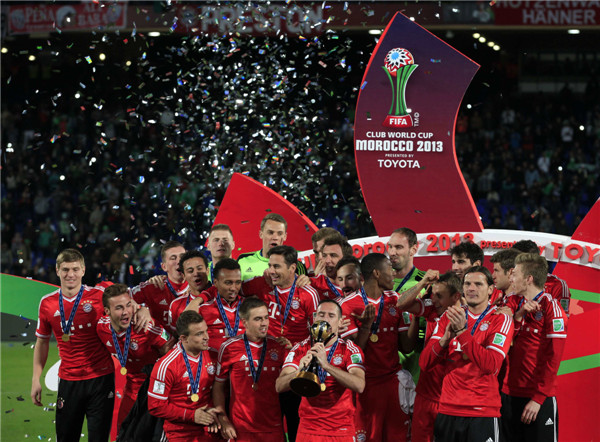
FIFA avoids hosting it in Europe or South America and it seemingly gets passed around like a hot coal between the likes of Japan, UAE and Morocco. Its winners hold the lofty title of Intercontinental Champions’ but the quality just isn’t in it. Other continental champs struggle to upstage UEFA’s big boys. This competition scores 6 points.
Number of Games: For UEFA clubs: 1
Qualification: The 6 continental champions.
Prestige: The Intercontinental Cup (IC) was founded in 1960 with the FIFA CWC founded as recently as 2000. Its current manifestation – the FIFA Intercontinental Cup – commenced in 2025. The 20th Century version was more prestigious because S. American clubs were more competitive back then. The IC doesn’t get much media exposure until the final game partly because domestic seasons don’t pause for it. It takes a back seat for serious contenders for the tier 1 Title or CL.
League Cup
National cups, even as prestigious as the FA Cup, come second to European knockout cups nowadays and the EFL League Cup in turn sits in the FA Cup’s shadow. Sometimes derided as the ‘Micky Mouse Cup’ by those on the sidelines, it’s the most minor of the ‘major trophies’.
The giant-killer, one-game knockout rounds of the EFL League Cup are short and sweet, and it is a fun trophy. The final is at Wembley though it anti-climaxes a bit in March when the rest of the season is switching into 5th gear. It has the glamour of Premier League participation and this boosts game revenue considerably. Little-league clubs can have a crack at winning a big pay day by beating the nation’s bigger boys. It scores 8 points.

Min number of games: 6 for a PL team.
Qualification: Open to the top 4 tiers of English Football.
Prestige: Decent sized audiences within England yet it rarely sells out stadiums. It was founded in 1960. Memorable cup runs includes then 4th Tier Bradford City’s campaign in 2012-13. Incredibly, they made it to the final, knocking out PL giants Aston Villa and Arsenal on the way. At Wembley however they were convincingly beaten 5 – 0 by PL Welsh club Swansea City, winning that club’s first ever major trophy.
Other prolific nations with a League Cup includes Portugal and Scotland.
UEFA Conference League
There is not too much to say about the UEFA Conference League as it is very new, but it is UEFA’s third tier league/knockout competition which includes champions from UEFA’s poorer leagues, cup winners from higher-up leagues, with a sprinkle of teams from UEFA’s ‘Big Five’ leagues to give it some quality and prestige.
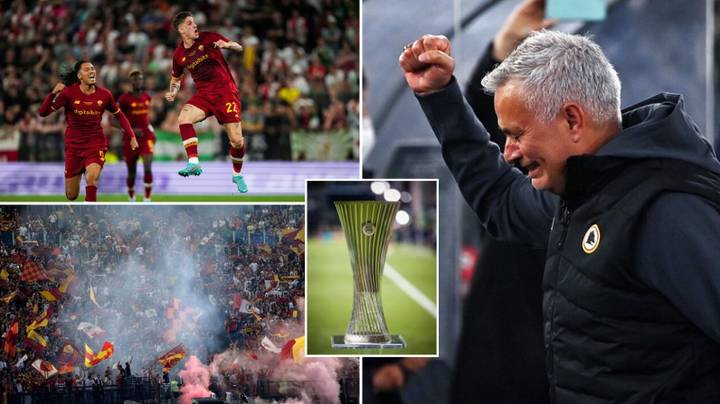
The UEFA Conference League is where the ‘chaff’ of the Europa League are now directed. AS Roma beat Feyenoord in the final to win the inaugural edition in 2022.
It scores 8 points
Minimum number of games: 13
Qualification: Open to domestic cup winners, high-finishing clubs in UEFA’s top leagues and champions of its weaker leagues who failed to qualify for the Europa or Champions Leagues.
Prestige: Moderate for all clubs within UEFA’s top 10 ranked domestic leagues. It is debateable whether this competition is a major trophy for clubs in UEFA’s ‘Big Five’ leagues.
National Cup
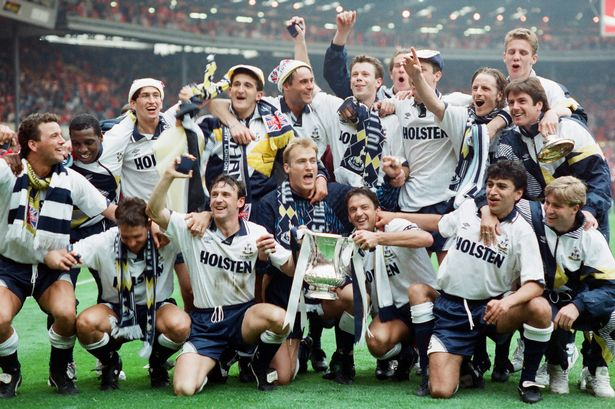
National Cups are the nation’s premier club knockout competition, and in the case of the English FA Cup, the oldest national competition in the world at 154 years old (2025). It also includes no less than 745 teams. The FA Cup goes back to almost the dawn of football time; a time before Division 1 (Pre PL); a time when England v Scotland internationals were the epicentre of global football; a time when amateur public school teams battled it out with increasingly professional clubs across London, the Midlands and the North. It’s the most prestigious domestic knockout trophy in the world with the romance of giving amateur clubs the chance, in theory, to eventually play at Wembley in May.
UEFA’s continental glitz and glamour and greater financial rewards means the National Cup is overshadowed by UEFA’s competitions. It’s normal in the FA Cup (and EFL Cup) for top PL clubs to use it to experiment and, just as frequently, it’s used to rest overworked core players. Watered down PL teams negatively affect broadcasting income and gate receipts. Fans are split between the appeal of an underdog story and wanting to see the two best teams slug it out in the final. A much bigger deal pre-1960s before UEFA competitions, this trophy scores 10 points.
Min number of games: 6 for PL teams.
Qualification: Open to the top 10 tiers of English Football.
Prestige: Founded in 1871, The FA Cup is the oldest cup competition in the world. This gives it both huge fan engagement and an international profile unsurpassed by other National Cups. Games against minnow clubs still make it hard to fill stadiums and makes it non-lucrative. It pales into the shadow of PL and UEFA football these days.
PL minnows Wigan had a season to remember in 2013, their attractive style of play couldn’t save the club from league relegation; but in the FA Cup they managed to knock out Everton 3 – 0 in the semi-finals then, amazingly, they defeated Man City’s galacticos in the FA final, winning their first ever major trophy.
Other prolific NCs include Spain’s Copa Del Rey, Germany’s DFB Pokal, Italy’s Coppa Italia and France’s Coupe de France.
UEFA Cup / Europa League
Outside the stratosphere of private-jet class European clubs, which count their cup trophies around stacks of championships, winning the 2nd of UEFA’s three knockout competitions has given a lot of the more humble clubs many glory nights and won over lots of fans. The modern Europa League is a group stage/knockout competition with a mix of championship/cup winners from leagues further down down the UEFA Coefficient Rankings, and ‘underachievers’ in the UEFA Coefficient’s top six leagues that fail to qualify for the CL.
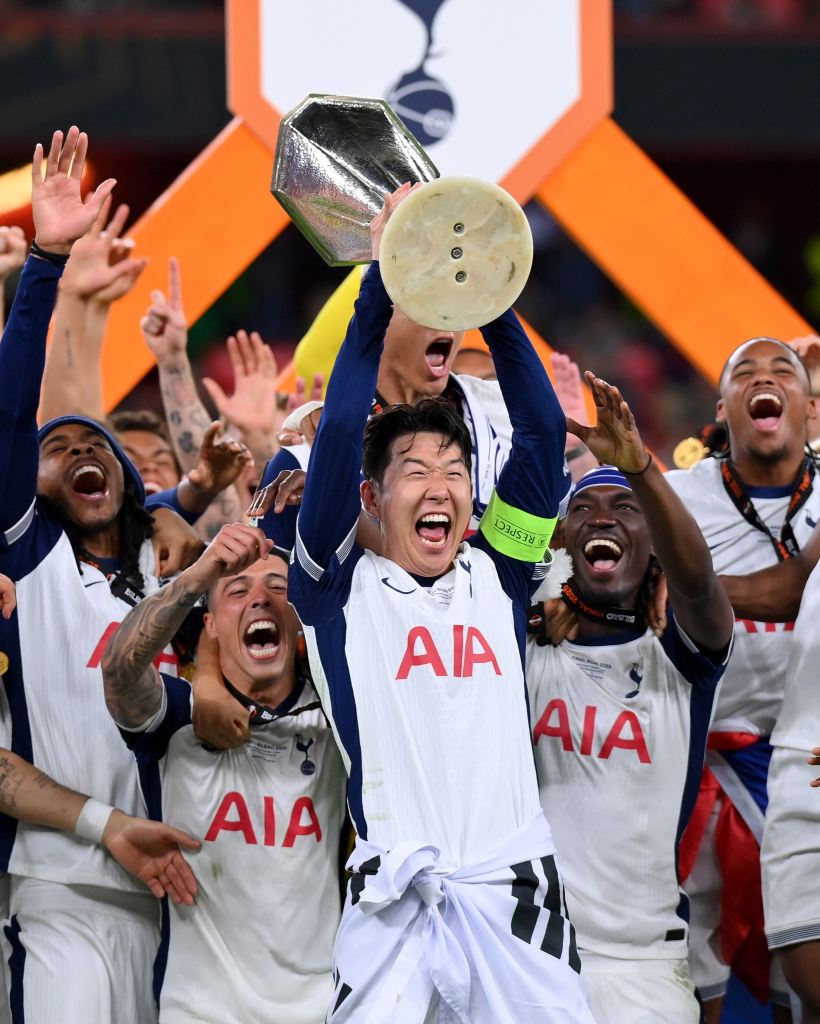
In its ‘UEFA Cup’ manifestation, it was a tough, fixating trophy chase but the enlarged Europa League potters along in the background more and only really heats up in the quarter finals. It’s the equivalent of under half a regular league again in terms of no. of games – 15 – and a lot for a knockout competition. Its quality loosely equals the EFL Championship in the group stages and approximately PL bottom 15 in the knockouts.
Being UEFA, what really separates this and the CL from domestic football is its continent-wide footprint, involving clubs from almost every single country in Europe, and even further afield, playing for the chance to take on Europe’s big clubs. Powerhouse clubs which bully their home leagues naturally want to go on and test themselves on a higher stage so this gives UEFA the prestige. Its global audience is bigger which reflects the higher prize money and media revenue. Just getting through the preliminary qualifying round of the EL earns 3.6 million Euros (Compared to EFL League Cup winners’ £100,000 prize.) So, it has the prestige and money but on the other hand some of the opposition is completely unfamiliar. Plus its got lots of over-the-hill clubs too. This trophy gets 12 points.
Min number of games: 15
Qualification: Open to domestic cup winners and high-finishing clubs in UEFA’s stronger leagues.
Prestige: Only running in its present EL format since 2008, It has international glamour on one hand yet lacks fan engagement on the other, not taken seriously by Europe’s top leagues until at least the knockout stages. Clubs frequently see it as a ball-and-chain to CL qualification in their domestic league campaigns yet, recently, the winners were given a place in the following season’s CL Group Stage.
UEFA Cup Winners’ Cup

Before the modern EL, juxtaposed between UEFA’s first and second tier knockout trophies between 1960 and 1999, was the ‘UEFA Cup Winners’ Cup’ (UEFA CWC), and as the name implies, was for Cup winners only – just one from each nation.
It had a no nonsense 32 team knockout format and was the Mercedes of football competitions until it declined in the 1990s. This scores a slightly higher 13 points for the winning pedigree of its teams.
Min number of games: 9
Qualification: Open to UEFA’s top 32 Cup winners.
Prestige: Founded in 1960 when UEFA competition was not as inclusive. If the then European Cup only had the best team from each nation, then one could surmise this tournament had each nation’s second best. The quality of football and calibre of club was better than its successor, the UEFA Cup, as a result.
Quadrennial FIFA Club World Cup

The expanded FIFA Club World Cup (CWC) is designed to be the next step up in competitive football at the global level featuring 32 teams in a format akin to FIFA’s national-team World Cup – the most popular football competition in the world. The similar format of the CWC implies FIFA would like it to rival the regular World Cup in popularity and prestige. Chelsea beat French and European champions Paris Saint Germain to win the inaugural world championship. This scores 15 points.
Min number of games: 7
Qualification: Open to each confederation’s previous 4 continental champions, plus the highest ranked clubs by coefficient not already qualified. Uniquely, it’s competed only once per four years.
Prestige: Technically the most prestigious competition in the world, its mixed quality combines some of the best teams with at least one semi-amateur side. Fan engagement with the inaugural 2025 edition has also been ‘mixed’.
UEFA European Cup / Champions League
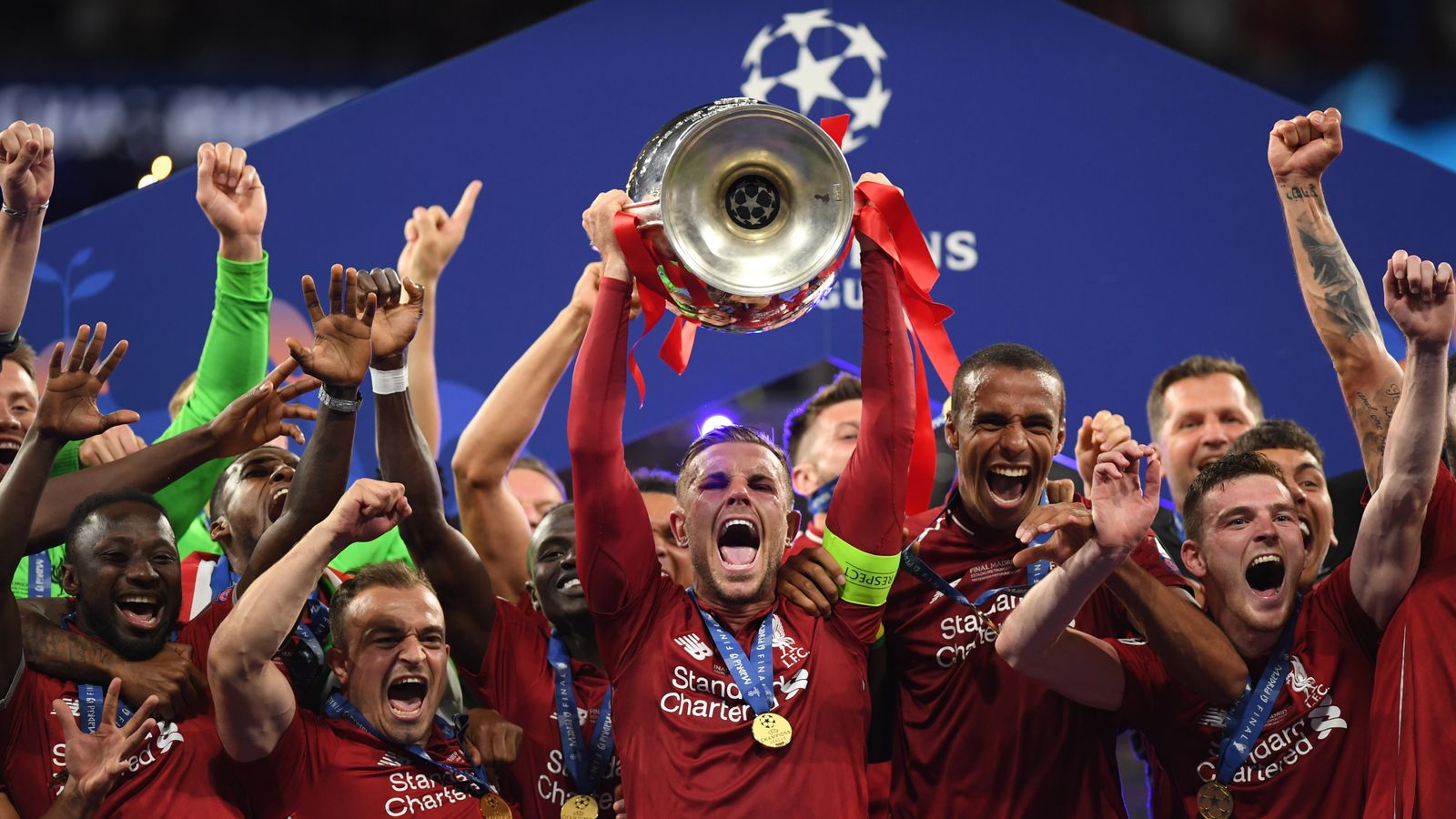
The Champions’ League; for every player with an ego to match their wages; every world class volley, flick or bicycle kick – this is the arena for them. For every European club that has the money and facilities to put together a squad which comes out as top dogs over hundreds of other squads in its nation – this is for them. Showcasing the best football in the world, the UEFA Champions’ League hosts the champions and giants of European football and they battle it out to be called ‘the best in Europe’ and, really, ‘the World’.
This is a group stage / knockout competition where every single champion in Europe, even Gibraltar’s, gets a shot at. Yet, teams from lower level nations must try very hard and be most fortunate to make it into the group stage. They make EL group stage if they’re lucky, such is the stiff competition for places. In reality, this is the playground for the increasingly exclusive clique of clubs in England, Spain, Germany, Italy and France who have a chance of keeping pace with the breakneck wage rises that the slickest player agents demand. Its quality level is at least 90% PL level in the group stages, and then the knockout stages? The quality pushes PL standards to the extreme – top six quality and higher. It is head and shoulders above any other knockout competition but still comes second to the mainstay of domestic league football. It scores 17.
Min number of games: 15
Qualification: Open to the league champions of every UEFA nation to enter in the Qualification Stage/Group Stage. At least four teams each from Spain, England, Germany and Italy enter in the Group Stage (as of the 2025 UEFA Club Coefficient).
Prestige: Originally founded in 1955, this is UEFA’s oldest tournament. Europe’s leagues are the most popular in the world and its leagues play the best football. So the one tournament which pits the strongest teams from those leagues against each other makes the CL the creme de la creme of football competitions and the most prestigious in the world.
League Championship
Alongside Germany’s Bundesliga, Italy’s Serie A, France’s Ligue 1 and Spain’s La Liga, the Premier League (PL) is the Top-Tier league in its nation. What distinguishes these top five leagues, and England’s PL in particular, from leagues of other big footballing nations? For one, their history; there are few sports leagues that go all the way back to the 19th Century in the case of England’s Top-Tier league.
Second is the large number of clubs that have contributed to the glory of football and are institutions in their own right. So just to get promoted to the PL is the likely culmination of decades of hard work on and off the pitch to build up the club to an annual turnover of tens of millions of pounds. A club must have spent decades climbing over the shoulders of hundreds of clubs at no less than 20 levels of English football. By tier 5, they are nearly all fully professional outfits and, just to give you an idea of how big even clubs in the second tier of English football are – the 20 clubs in the 18/19 season held 34 league championships and three European Cups between them. Income and outgoings skyrocket under the PL spotlight. Clubs become major brand names in their own right. So, it is in this ‘land of giants’ that a club gets pitted against 19 others to decide for certain which is the best team in the country.
The PL is a ludicrously lucrative competition because of its rich history in the ‘Home of Football’, the much vaunted passion of the fans and packed stadiums. The fact its fanbase has become highly consumerised lets its clubs afford the best players in the world. The TV rights deals are the highest valued in the world which means that even league cannon fodder can afford international players and in the top four teams some of the best football in the world is on display. The PL is rated the most valuable, if not best, of the ‘Big Five’. For the clubs in any of those Big Five, the league is their bread and butter. Avoiding relegation is essential to keeping the financial gravy train rolling. Although the CL is more prestigious, their leagues provide the lion’s share of club income with more games in it than the CL, National Cup and League Cup put together. For this reason the League Championship is worth 18 points.

Number of games: 38 for the Premier League
Qualification: The top 3 teams from Tier 2 qualify.
Prestige: The PL is the most prestigious domestic league in the world. The other top 4 leagues in UEFA’s Association Coefficient also have long histories of their own and with top teams which have contributed a lot to European footballing history.
Bonus Points
1 bonus point will be additionally added for every major-trophy ‘Treble’ achieved in a season.
How successful is your club?
With this system, we can see the total sum of what each club has won and where it places them in the ‘Most Successful’ ranking. Is it Man U with its Titles or Liverpool with her CL trophies? Real Madrid or Barcelona? Celtic or Rangers? Inter or AC Milan?
Make a one-time donation
Make a monthly donation
Make a yearly donation
Choose an amount
Or enter a custom amount
Your contribution is appreciated.
Your contribution is appreciated.
Your contribution is appreciated.
DonateDonate monthlyDonate yearly History and Things