‘We lose every battle but the last one’ is a proverb referring to how the British prevailed in a catalogue of conflicts from the British Empire’s inception in 1707 until its end in the 1950s, yet were mauled on many an occasion.
This 4-part article includes the worst military calamity of every decade – failures little and large that resulted in losses of men and matériel, strategic reversals, and political trauma.
Capture of Saint John, 1709
At a time when the French and British, with their respective Native American allies, were wrestling for control of North America during Queen Anne’s War, the French struck the British like lightning at their main garrison of Saint John in modern day New Brunswick and seized the seat of British power in the region.
On New Year’s Day, a mixed force of 150 marines and settlers sneaked up on the town’s fort at the crack of dawn with scaling ladders. The fort was manned by almost 500 defenders but, although the attackers were spotted and the alarm raised, the British were quickly overwhelmed and captured because an air of indolence pervaded the fort; instances of cowardice and indifference were numerous and they struggled to grasp the seriousness of their situation until too late. The French destroyed the fort but abandoned St John soon after.
Quebec Expedition Disaster, 1711

As the contest for north-west America progressed, the British felt the time was ripe for a naval expedition to capture Quebec – the capital of New France. Sailing from Boston in late August, then, a large fleet of over 70 vessels with 13,000 men on board entered the vast estuary of the Saint Lawrence River.
Whilst still in the Gulf, strong winds picked up allowing them little headway. Fog then rolled in, blanketing both sea and shore. Fleet commander Rear Admiral Walker, forebodingly overconfident in his sense of orientation, led his fleet too close to the treacherous northern shoreline where a number of his ships floundered and sank. Throughout the night Walker heard sounds of distress, and at times when the fog lifted, ships could be seen in the distance being ground against the rocks. Eight transports were lost and a 1400 men perished. The expedition to capture the Quebec was abandoned thus.
Blockade of Porto Bello, 1726-1727

During yet another bout of Anglo-Spanish warring, a British fleet of 20 warships was sent forth to blockade Spanish treasure ships in Porto Bello, modern Panama, and ordered to let no ship enter nor leave the port.
They captured a few Spanish vessels upon arrival in 1726 before both sides settled in for the blockade. The next six months, however, were disastrous for the Royal Navy as yellow fever decimated its ranks. 3000-4000 out of 4,600 sailors, skin yellowed by jaundice and with blood leaking out of their orifices, died. The Fleet’s Rear Admiral Francis Hosier also succumbed to the disease as did his next two successors. Repeatedly returning to Jamaica to replenish its crewmen meant the fleet’s stranglehold on Porto Bello fell limp. Thus, the Spanish treasure fleet was able to break out and deliver its bounty home in March 1727. With the blockade a failure, the fleet returned home in ignominy in 1729.
Attack on La Guaira, 1739
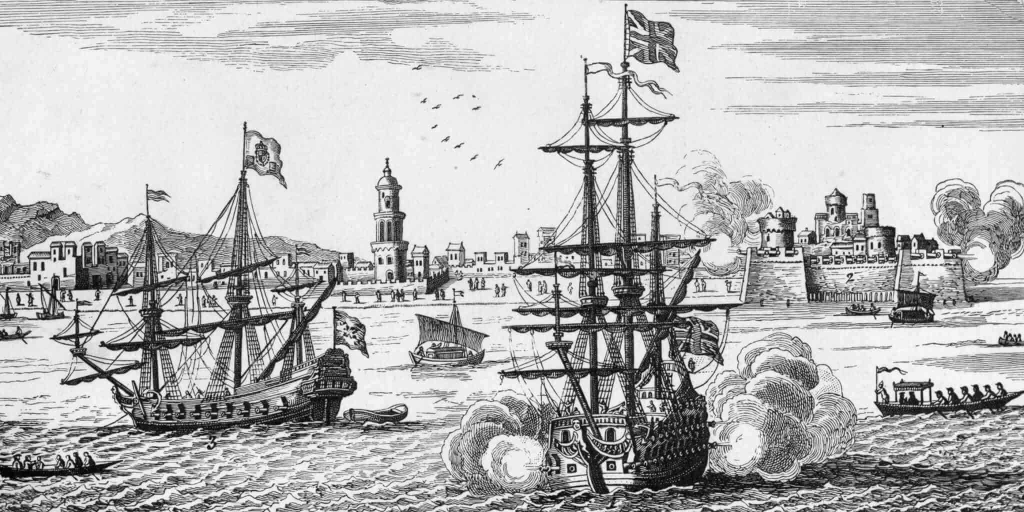
The War of Jenkin’s Ear with Spain was declared on October the 19th but just three days later, Captain Waterhouse, with three warships under his command, had already sailed from Antigua and arrived off the port of La Guaira on a mission to seize Spanish merchant shipping. He spotted some small ships in harbour and so devised the geniusly cunning plan of sailing into the port flying a Spanish flag. From there, the Captain would suppress its defences and seize what ships he could whilst the port’s defenders gawped in incredulity. But La Guaira was a well defended port. Its defenders were alert and well led. They were not at all deceived by Waterhouse’s ruse, they merely held fire until the British sailed in nice and close before fire erupted from all sides. The British were battered for three hours by intense cannonade before limping back to Jamaica to lick their wounds. They’d been repulsed in this opening exchange between the two belligerents and Waterhouse had only a handful of small merchant ships to show for it.
The Captain was reprimanded by Admiral Vernon for the damage and loss of men in this venture. A 2nd, much larger attack on La Guaira four years later would also end in failure.
Battle of Cartagena de Indias, 1741

As part of a British plan to oust the Spanish from their Caribbean holdings during the War of Jenkins’ Ear, a large military expedition sailed with 30,000 men aboard 250 ships, including 12,000 soldiers, to seize Cartagena de Indias – one of Spain’s main ports, defended by just 6,000 military personnel and six warships.
Casualties from disease were already sky-high before the fleet laboured to incapacitate five outlying forts which they managed with considerable loss. The entire land force was then put ashore to capture the fort of San Lazaro that guarded Cartagena landward. The British, now without siege engineers to breach the fort’s walls, resorted to a direct assault anyhow. 2,000 men tried to scale the walls but, to their dismay, observed their ladders were too short. The defenders quickly started delivering withering fire on them. The Brits were in danger of getting cut off, so they withdrew.
Riven by disease throughout, they suffered 18,000 casualties by the time they sailed home with their tails between their legs. The political fallout was huge. Robert Warpole’s government collapsed, Spain’s hold over the Caribbean was secured, and Britain was forced to withdraw its support for Austria which triggered the start of the War of Austrian Succession.
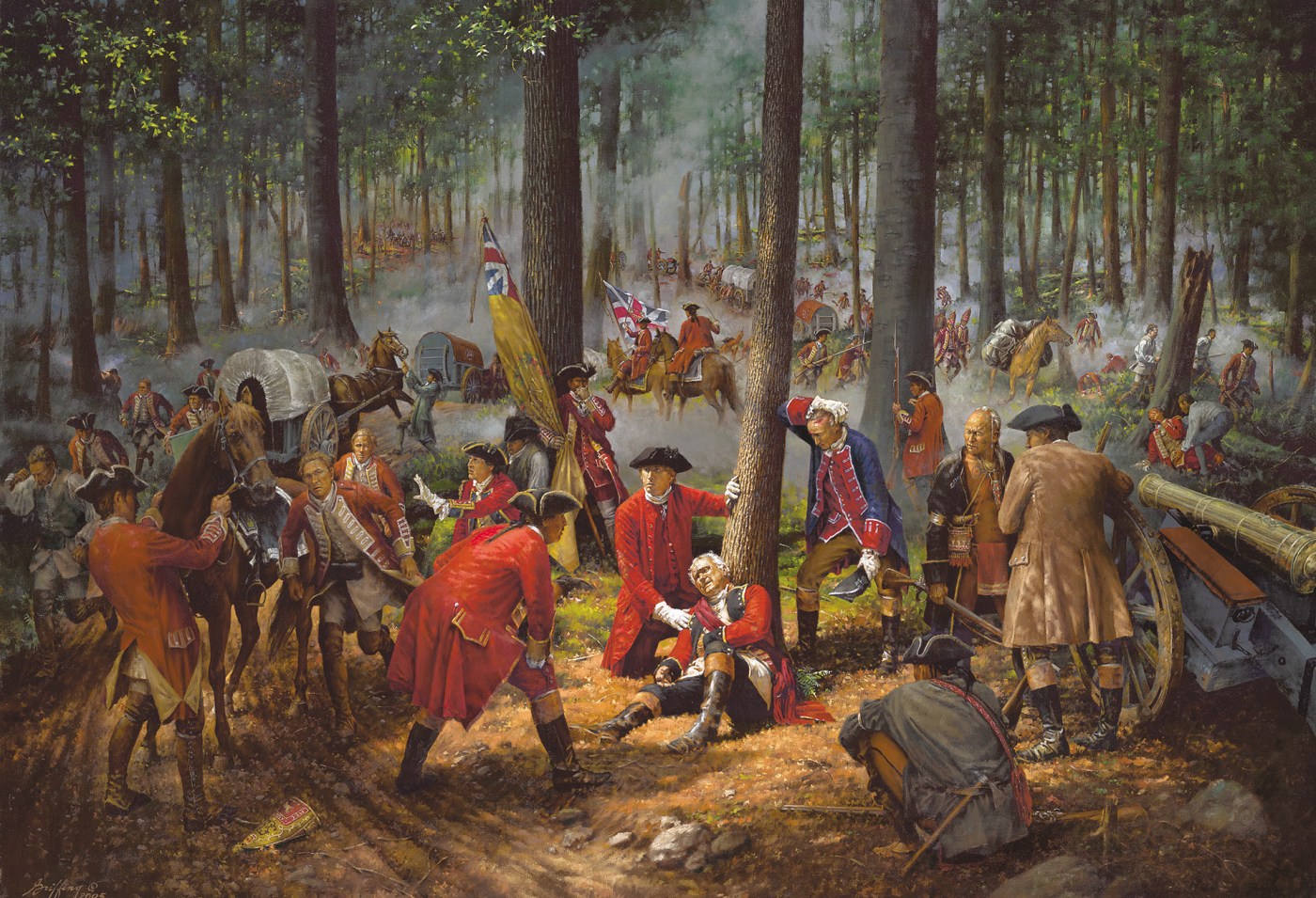
Battle of the Monongahela, 1755
Strategic and tactical naivety within Westminster and the British Army respectively resulted in the French-Indians overwhelming and routing a major force of British amidst the dense woodland of North America. A big chunk of the British regular forces there, commanded by Major General Edward Braddock and with George Washington under his command, were sent to hack a path through the unrelentingly thick forest to attack Fort Duquesne and secure Ohio Country. As an advance of 1,300 regular and militia troops rushed towards the fort near what is now Braddock, Pennsylvania, a French force, swarming with Indian warriors, attacked them. The British held their own against the French, yet their rigid European movement-and-fire tactics failed miserably in the face of free-flowing hit-&-run skirmishing by the Indians. They sliced the force of redcoats to pieces, spreading panic and confusion among them. They sniped at the redcoats from among the brush and charged among the ill formed ranks shrieking bloodcurdling war-cries, nailing the scalps of unfortunates on tree trunks to further panic the British. Braddock almost managed to restore some tactical control over his ranks until he, too, fell. With that, the redcoats discipline collapsed and they fled the battlefield.
950 of the 1300 strong army were casualties and more were captured. It was a devastating defeat. Braddock’s force had been regarded as overwhelmingly strong, so when news reached home it delivered a hard jolt to British hubris. It forced them to accept that the French-Indian alliance was going to be a much harder nut to crack. Crown forces struggled on for three more years.
Devil’s Hole Massacre, 1763
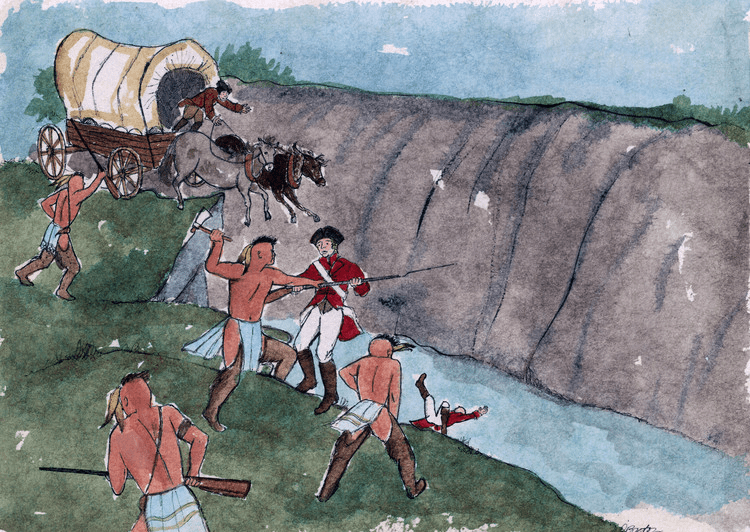
The British suffered significant losses near the Niagara Falls in modern-day New York State when a wagon convoy was ambushed and destroyed before a rescue party of infantry was annihilated.
In the first year of a Native-American rebellion triggered by the will to drive British rule away from the Great Lakes region and led by Chief Pontiac, a band of 300-500 warriors ambushed a guarded wagon train of 24 men. As the trail entered a steep ravine, the wagon train was bushwhacked, with the men and horses at the mercy of hundreds of Seneca who quickly cut them down. Just four of the party escaped to raise the alarm. Within proximity were a couple of companies of light infantry and they rushed off to rescue the wagon train. The Seneca warband redeployed a mile from the original ambush site to set a new trap for the infantry. They attacked from a brush covered hill and cut off the British from their lines of retreat. Despite being raised specifically for the kind of ‘bush warfare’ the Native Americans were so adept at, this light infantry force was also wiped out with over 80 butchered and scalped.
The Devil’s Hole Massacre reminded the British Crown that the American wilderness was still a dangerous place for its forces, even if the French-Indian War was over.
Click for Part 2
Make a one-time donation
Make a monthly donation
Make a yearly donation
Choose an amount
Or enter a custom amount
Your contribution is appreciated.
Your contribution is appreciated.
Your contribution is appreciated.
DonateDonate monthlyDonate yearly History and Things