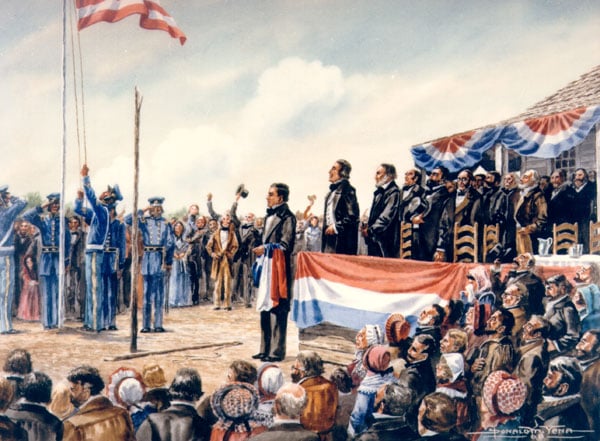
Ten states that existed after the Ratification of Independence, within the modern-day borders of the USA with effective autonomy from Washington DC whilst possessing many, if not all, of the features of a sovereign state.
State of Vermont (1777–1791)
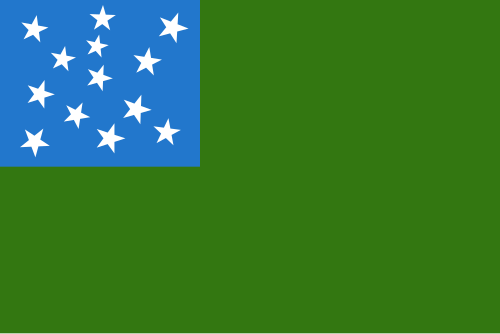
The area of Vermont in New England came to be settled by subjects of the British crown in the mid-to-late 1700s after land grants were issued by the governor of New Hampshire before New York was allotted territory there by King George III. Yet, a militia named the ‘Green Mountain Boys’ (verts mont means ‘green mountain’ in French) successfully resisted New York from exercising its authority in the region and, later as the US Revolutionary War kicked off, they drove out loyalists and fought the British. Two years into the Revolutionary War and guarded by the Green Mountain Boys, the delegates of 28 towns came together on January 15, 1777 to declare independence from the land claimed by the still-British provinces of Quebec, New Hampshire and New York.
The state’s first capital was Westminster. This republic had its own militia, postal service, constitution and coinage. Vermont also banned adult slavery. Its leader was Governor Thomas Chittenden and the state engaged in diplomatic relations with the US, France and the Netherlands, although its existence was never formally acknowledged by any nation abroad.
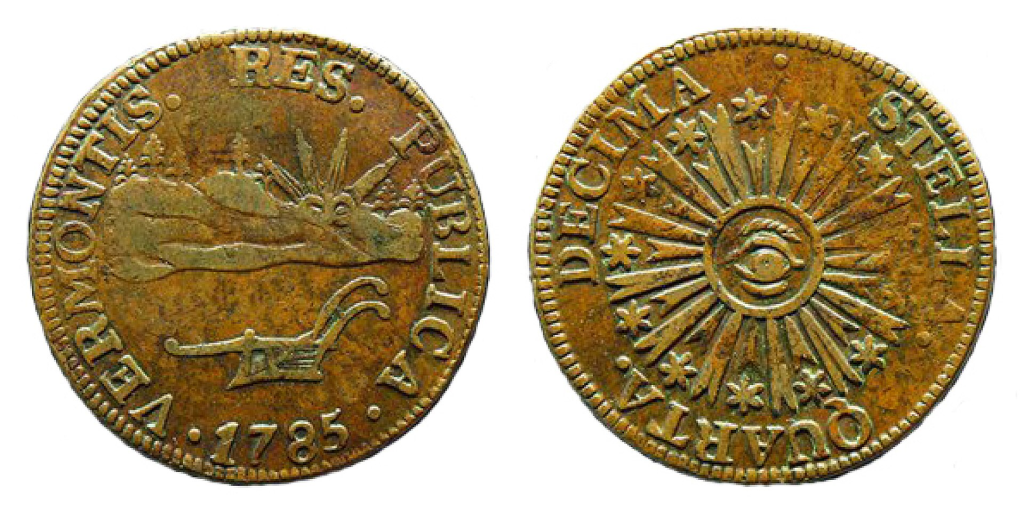
In 1780, after the British led a raid into Vermont, there were secret talks with Quebec about the possibility of rejoining British rule. In 1783, the revolutionary war was won and most Vermonters wanted to join the US Republic. They were barred, however, primarily due to Vermont’s territorial disputes with New York.
Finally in 1791, after paying out $30,000 to New Yorkers who claimed land in Vermont, the state became the US 14th on March 4th.
State of Muskogee (1799-1803)
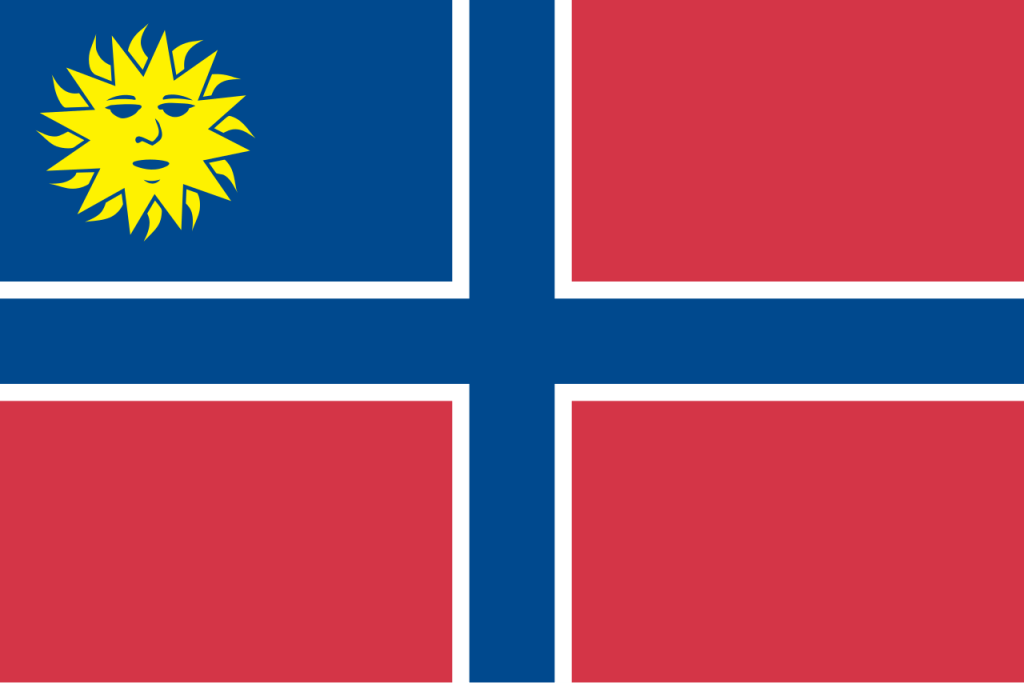
The State of Muskogee was founded by William Augustus Bowles. Bowles had served as an officer for the British during the Revolution who went on to assimilate with the Muscogee native Americans, and eventually become their leader. Spain, meanwhile, had reoccupied Florida after Britain’s defeat so Bowles led his tribesmen in a number of clashes with the Spanish whilst acquiring British backing.
In 1799, Bowles declared himself ‘Director General and Commander-In-Chief of the Muskogee Nation’. It was centred on its capital Mikasuke and Bowles assured his people that he had the backing of the British. On October 31, he issued a proclamation declaring the 1796 treaty between Spain and the United States, which ceded all of West Florida above the 31st parallel to the United States, void because it ignored the Natives’ sovereignty over Florida. Bowles then started agitating the US Govt. and gathering support from surrounding native groups by supplying them gunpowder.
Several English adventurers from the Bahamas served as government administrators and Muskogee even built its own three-ship navy which he used to attack Spanish shipping. In 1800, the Spanish tried to attack the Muskogee capital but got lost in the swamps but Bowles also failed in an attack on San Marcos in 1802. Later that year, peace between the British and Spanish was signed in the Treaty of Amiens and, with that, Bowles lost his backing and credibility. The Americans and Iberians teamed up against Bowles and captured him before the man perished in a Cuban jail, in 1805.
Republic of East Florida (1812)

Most inhabitants of the peninsula, particularly the coastline around Amelia Island, preferred Spanish over US control as trade thrived there and slavery was less sanctioned. Yet Americans, all away up to the White House, had designs on Florida. In 1812, President Madison secretly commissioned General George Mathews and Colonel John McKee to try and acquire areas of Florida by peaceful means, yet the two took an ambiguous interpretation of their orders to stage an uprising by using US citizens from neighbouring Georgia with a view that the US Army could intervene and occupy the territory.
On March 14th, 1812, several hundred self-named “Patriots of Amelia Island” under General Mathews captured the island after the Spanish surrendered Fort San Carlos. They declared independence and then on July 17th ratified a constitution. With US troops brought in by Mathews, the patriots then began foraging and raiding the surrounding East coast areas, raising the patriot flag where they went. Yet, US federal support ultimately did not materialise and Amelia Island’s patriot republic collapsed in 1813.
Yet, the Republic of East Florida would be revived. On January 10, 1814, Gen. Buckner Harris of Georgia led a group of volunteers to the former site of Paynes Town, erected a blockhouse called Fort Mitchell and local settlers assembled there to declare the area to be the “District of Elotchaway of the Republic of East Florida”. President Madison’s government still refused to support this republic, however. The Spanish governor placed a bounty on Harris’ head which the Seminoles collected when on May 5, 1814, they ambushed and killed him, ending the republic for good, kinda…
Republic of the Floridas (1817)

Although the White House had stopped short of openly supporting breakaway Floridian republics and risking war with Spain, a desire to secure their southern border remained as the peninsula continued to be a haven for runaway slaves, Loyalists and hostile Native Americans. Plus, Spanish hold over Florida was only getting weaker – the aft-mentioned Amelia Island was manned by just “50 or 60 invalids”. A Scottish adventurer and confidence-trickster named Gregor MacGregor wanted to take possession of Amelia Island as an investment with a view to incorporating it into the USA later. After gathering financial and political support in Baltimore, he recruited 150 mercenaries and on June 29th, captured the island – its defending invalids surrendering without a fight. MacGregor ran up the green flag of his new republic before his men fought off a Spanish attack in July.
Yet, the venture didn’t make any progress and as soon as MacGregor tried to sail one of his ships out of the harbour, it was overtaken by a Spanish vessel and nearly all its crew butchered. Plus the locals were increasingly less welcoming. Desertions among the ‘patriots’ began and, after two of Macgregor’s officers resigned in September, the Scotsman himself abandoned the island, leaving the republic to become little more than a pirate base after a French buccaneer named Louis-Michel Aury arrived and took joint command.
The US Government, unhappy at this state of affairs, captured the island without any resistance on December 23. Florida would be incorporated into the US in 1822.
Republic of Texas (1836–1846)
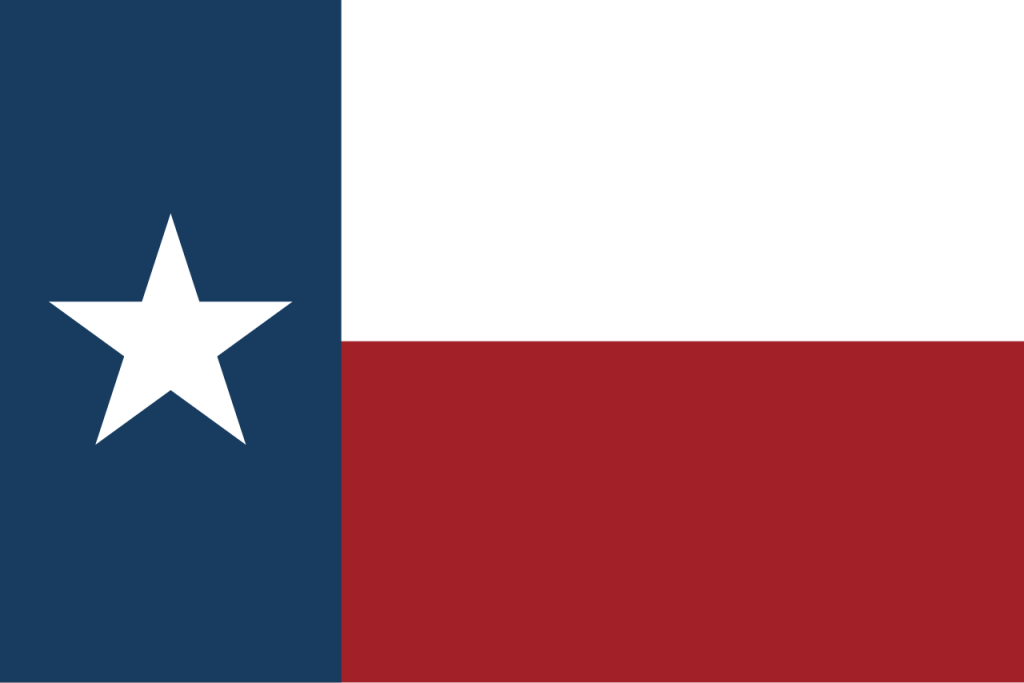
Around the period that the Mexican republic gained independence from the Spanish Empire, there were two premature attempts to establish a Texan republic. American filibusters led by Bernardo Gutiérrez fought to carve out a republic in 1813 but were defeated by the Spanish, then in 1819 a doctor named James Long led an expedition to establish a republic but the Spanish/Mexican Empire crushed it. Many who were involved in these ventures were leading men in the later more credible Republic of Texas.
That the northern provinces of the soon-to-become Mexican republic were sparsely populated made it inevitable that Americans would move in and an independence movement foment. In the 1820s, the Mexican government tried to restrict American settlement, impose customs duties and enforce the ban on slavery. In response the settlers convened in 1832 to conceive a nation. In 1835, open revolt broke out, and in ‘36 they declared independence. The Mexican Army launched a campaign to defeat Texas’ militia forces and this resulted in the fabled Battle of the Alamo then, after a long retreat, the Texians emerged victorious at the Battle of San Jacinto. The Texians were now free to trailblaze their own path under the light of the Lone Star.
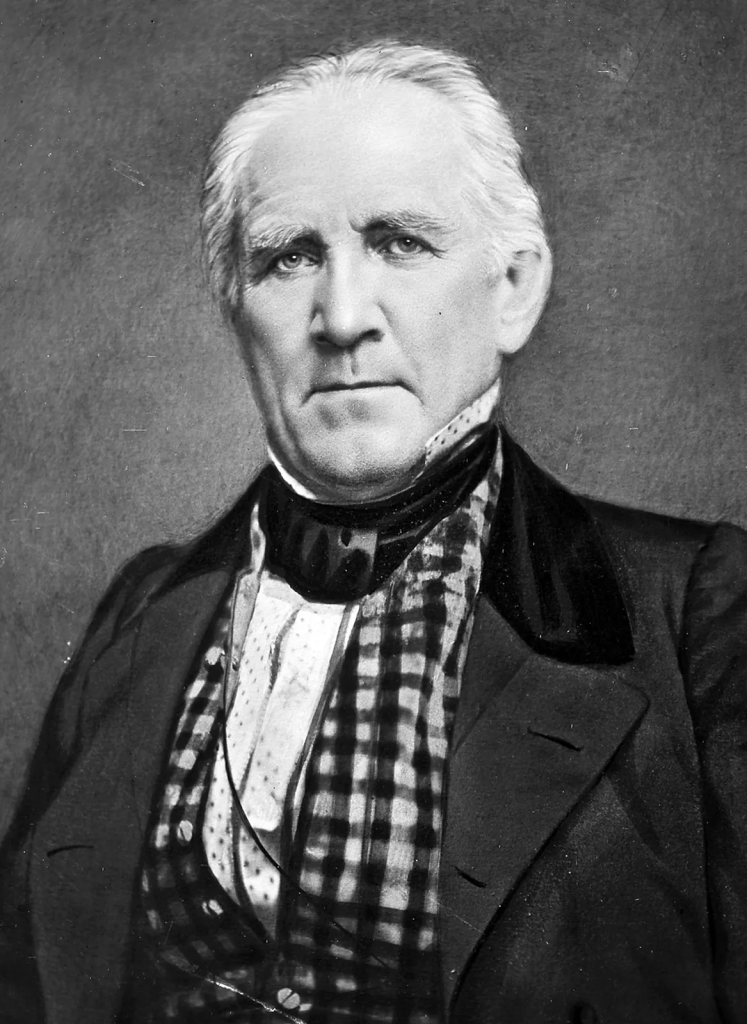
Sam Houston was Texas’ first elected president and Austin its capital city for most of its 10 years existence. It was only recognised by six other countries, but those included the USA, France and Britain. The constitution barred criminals from voting and electoral office, provisioned the congress to fund education, propped up slavery and awarded citizenship to any white settler after six months. Texas has its own Supreme Court and, in 1839, became the first nation in the world to enact a homestead exemption, under which creditors could not seize a person’s home. The republic’s main exports were crops. It had its own dollar currency though suffered significant financial challenges with no banking system of its own.
The republic was kept busy attacking and being attacked by surrounding Native American tribes, including suffering the largest raid on white cities in the ‘Great Raid of 1840’. They also fought Mexican forces a number of times including in the naval Battle of Campeche.
In 1845, the USA offered to annex the Republic of Texas, and on October 13, 1845, with massive national debts, a large majority of voters in the republic approved the offer. On Dec 29th, Texas became the 28th State of the USA with its national government dissolved in 1846.
Provisional Government of Oregon (1843-1849)
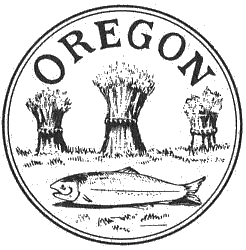
Some states in this list did not have grand designs to form republics independent from the US, they merely formed because the USA’s governance had yet to reach them. From the start of the 19th Century, American and French Canadian settlers moved into the Willamette River and French Prairie areas, respectively, yet this region on the north-west coast was so vast, remote and untamed, no governance existed.
The question of what to do with the lands of Ewing Young who died with no heir seemed as good a reason as any to thrash out the framework for an Oregon government with legislative authority to rule on such matters, but no agreement was made. As the early 19th Century progressed more settlers came and more meetings were held to discuss what sort of government they needed until 1841-43 when the Champoeg Meetings were held to form a government. On 5th July, the Organic Laws were adopted – less formal than a constitution – which divided the provisional government into three branches: a judiciary branch, executive branch, and legislature. In 1845, the executive branch then changed from a three-person committee to a governor. George Abernethy served as Oregon’s governor in the capital of Oregon City.
Oregon suffered from a serious lack of money and a system of wheat credit was established where settlers could exchange harvested wheat for credit with the Hudson Bay Company (HBC), the British HBC being one of the few hubs of trade in Oregon at that time. Governor Abernethy even created a form of money out of flint arrowheads with scraps of paper to them denoting their value to be exchanged for supplies at his store. A barter exchange economy was largely used in lieu of money.
The provisional government passed numerous laws, including allowing people to claim 640 acres (2.6 km2) if they improved the land; the establishment of a militia; a ban on African Americans residing in the state; plus a ban on the sale of ‘ardent spirits’ out of concern that the Native Americans would become hostile if intoxicated.
They did indeed become hostile. After the Whitman Massacre in 1847, the Oregon Militia were mobilised against the natives in the Cayuse War which was brought to a successful conclusion by 1850.
On June 15th, 1846, the Oregon Treaty was signed which ended Britain and America’s territorial dispute by dividing Oregon with the 49th parallel. This extended U.S. sovereignty over the region, but effective control would not occur until government officials arrived from the United States. Two years later, the United States Congress created the Oregon Territory which included today’s states of Oregon, Washington, and Idaho, and parts of Montana and Wyoming. Much of Oregon would be apportioned to Washington before Oregon became the 33rd US State of Oregon on February 14, 1859.
State of Deseret (1849-1850)
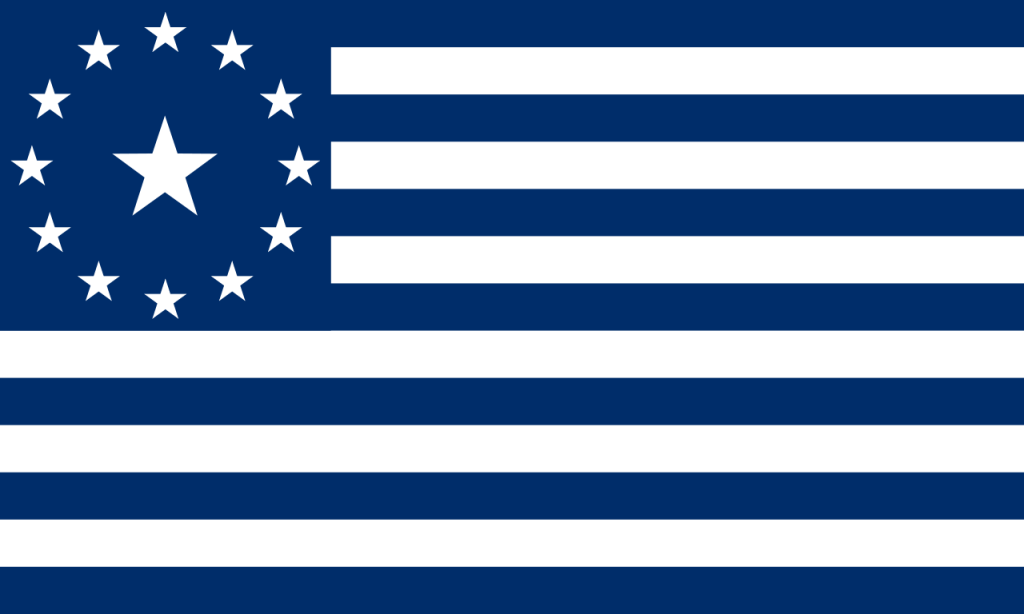
The Church of Jesus Christ Latter-day Saints (the Mormons) had been founded by Joseph Smith in 1830, and although it quickly grew in numbers, its community also provoked violent hostility from surrounding settlers and local government as the Mormon community leapfrogged westwards from New York to Missouri. There, they were violently expelled, and then in Illinois Smith was lynched. Now under the leadership of Brigham Young this Christian sect fled into the ‘Badlands’, centred around the Great Salt Lake valley, and settled there in 1847.
Salt Lake was in the former Mexican province of Alta California that was ceded in 1848. With a vast area between the Sierra Nevada and Rockies mountain ranges up for grabs, Young and his Mormons were vying with the state builders of New Mexico and California for possession of this area. He therefore gathered with his church elders, and because they already had a theocratic hierarchy they could quickly form a state government which they hoped to have recognised by US Congress.
They adopted a state constitution on March 6, 1849 based on that of Iowa. In the absence of US governance, the State of Deseret became the de facto government in the Great Basin. Three sessions of its General Assembly were held at the capital of Salt Lake City in which judges were appointed and a criminal code was written up, outlawing liquor and gambling. The LDS Church became the state religion, making Deseret a theodemocracy. Although Deseret never aspired to nationhood, its cultural homogeneity and state religion gave it the look and feel of a sovereign nation.
In 1850 the Utah Territory was created in place of Deseret, although Young was appointed its first governor and a Mormon shadow government continued in an effort to maintain its previous independence. They resisted US legislative encroachment, they even fought and lost the brief Utah War in 1857 in an effort to bar Young’s replacement as governor. Utah became the 45th US State in 1896.
The Great Republic of Rough and Ready (1850)
This township was founded in northern California in 1849 by a mining company during the ‘California Gold Rush’ and was named after General Zackory Taylor – dubbed ‘old rough and ready’ – before he went on to be promoted to Commander in Chief, aka the 12th President of the United States, that same year.
By 1850, the town’s population had exploded to 3,000, so quickly that the government hadn’t yet provisioned effective law and order. The townsfolk, resentful at their lawlessness whilst being taxed up to the eyeballs on their mining yields, declared secession from the Union on April 7th.
The Great Republic of Rough and Ready was formed as a free and independent republic and Col. Ebeneezer F. Brundage was elected President. The new President issued Brundage’s Manifesto, which read in part: “We…deem it necessary and prudent to withdraw from said Territory (of California) and from the United States of America to form, peacefully if we can, forcibly if we must, the Great Republic of Rough and Ready.” Along with his Secretary of State, Justice of the Peace Hans Q. Roberts, they signed a constitution similar to that of the United States.
Just three months later however, on the USA’s Independence Day, the people of Rough and Ready’s true allegiance showed through. Showing ‘drinkers remorse’ (neighbouring towns would not sell liquor to these ‘foreigners’), the township voted resoundingly to rejoin the USA.
The Confederate States of America (1861-1865)
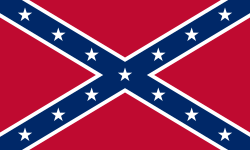
The most famous country on this list, the reasons why the southern states tore themselves off of the US Republic are many; their advocation of slavery may be the most prolific yet a lesser-known cause was the south’s fears of federal government overreach that was considered to have become compromised by the ‘Anglo-Dutch Banking Empire.’
Abraham Lincoln winning the 1860 presidential election triggered 11 states to secede: South Carolina, Mississippi, Florida, Alabama, Georgia, Louisiana, Texas, Virginia, Arkansas, Tennessee and North Carolina. These states became independent nations in their own right before they joined the Confederacy. In February 1861, Southern leaders met in Montgomery, Alabama to adopt their first constitution, establishing a confederation of “sovereign and independent states” which guaranteed them a republican form of government. Jefferson Davis was elected provisional president and his vice-president was Alexander Stephens. The Confederacy’s constitution was almost facsimile to the US one except, of course, for the provisions for slavery. For most of its existence, the Confederacy’s capital was Richmond, Virginia.
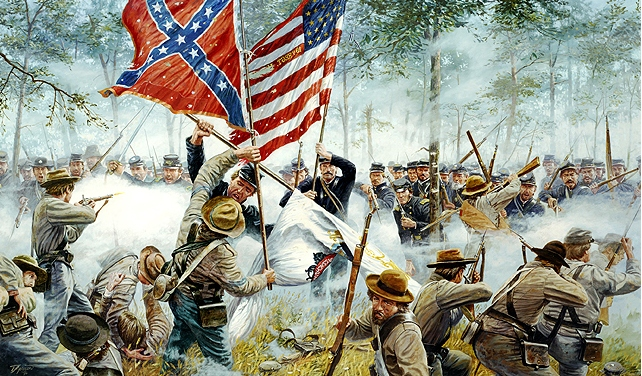
The entire four years of the Confederacy’s existence was consumed by a war for survival against the Union North. It suffered a clear inferiority in industrial capacity and manpower – despite the South’s access to slave labour to make up the shortfall – and this capacity only degraded as it lost territory. New Orleans was captured in April 1862; the Battle of Antietam was lost in September. With the loss of its riverways and seaways to Unionist Naval forces by 1863, the Southern war effort was ground into dust and collapsed in June 1865, thus uniting the states of America once more.
Kingdom / Republic of Hawaii (1795-1898)
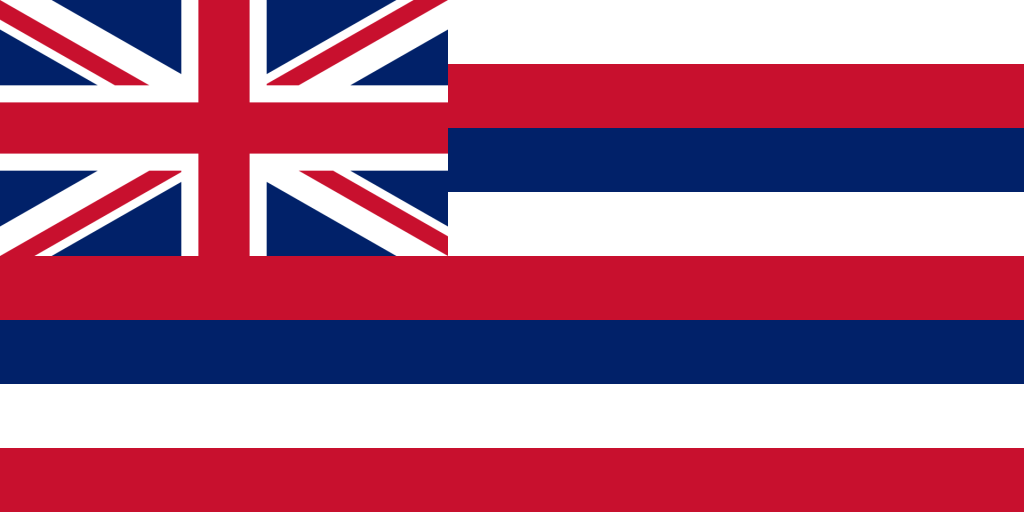
Hawaii was a fully autonomous Pacific nation before a country 2,000 miles away took control of the islands by increments in the 19th and 20th centuries. Settled circa 1000 AD, Hawaii was a patchwork of chiefdoms until a chieftain named Kamehameha conquered and unified the archipelago by 1810. From 1819, US protestant missionaries started converting many Hawaiians and began a process of ‘civilising’ the nation by subverting the indigenous culture. Hawaii was turned into a Christian monarchy with the signing of the 1840 Constitution. Other missionaries and their descendants became active in commercial and political affairs, leading to conflicts between the monarchy and its restive American subjects.
Bachelor King Kamehameha V did not name a successor on his deathbed so Lunalilo was elected but also died a year later without naming a successor. This led to a contest between Kalākaua and Emma Queen Consort of Kamehameha IV for the kingdom’s crown, resulting in riots which the westerners used as an excuse to land British and US troops to restore order in 1874. The precedent of having western troops deployed to the kingdom was the next step to taking political control of Hawaii. By 1887, Kalākaua was strong-armed into signing a new constitution which hobbled the monarch’s absolute power in favour of the business and political interests of the growing American population. Queen Liliʻuokalani took the throne in ‘91 and tried to reverse the ‘87 constitution but in response a group of mostly Euro-American business leaders and residents formed the Committee of Safety – named with totalitarian irony – to stage a coup d’état and seek annexation by the United States. With the backing of the USA which provided a company of US Marines to the committee, Queen Liliʻuokalani was overthrown in 1893.
An oligarchal republic run by 13 white men was now established which put down a rebellion in 1895. Despite the Blount Report of US President Cleveland’s administration concluding that the removal of Liliʻuokalani had been illegal, the USA annexed Hawaii in 1898 and the island chain became a US Territory, although it was granted self-governance and retained Iolani Palace as the capitol building. In 1959, the Hawaiians voted 94% in favour of becoming the USA’s 50th State. Today, a pro-sovereignty movement remains active.
 History and Things
Leave a comment