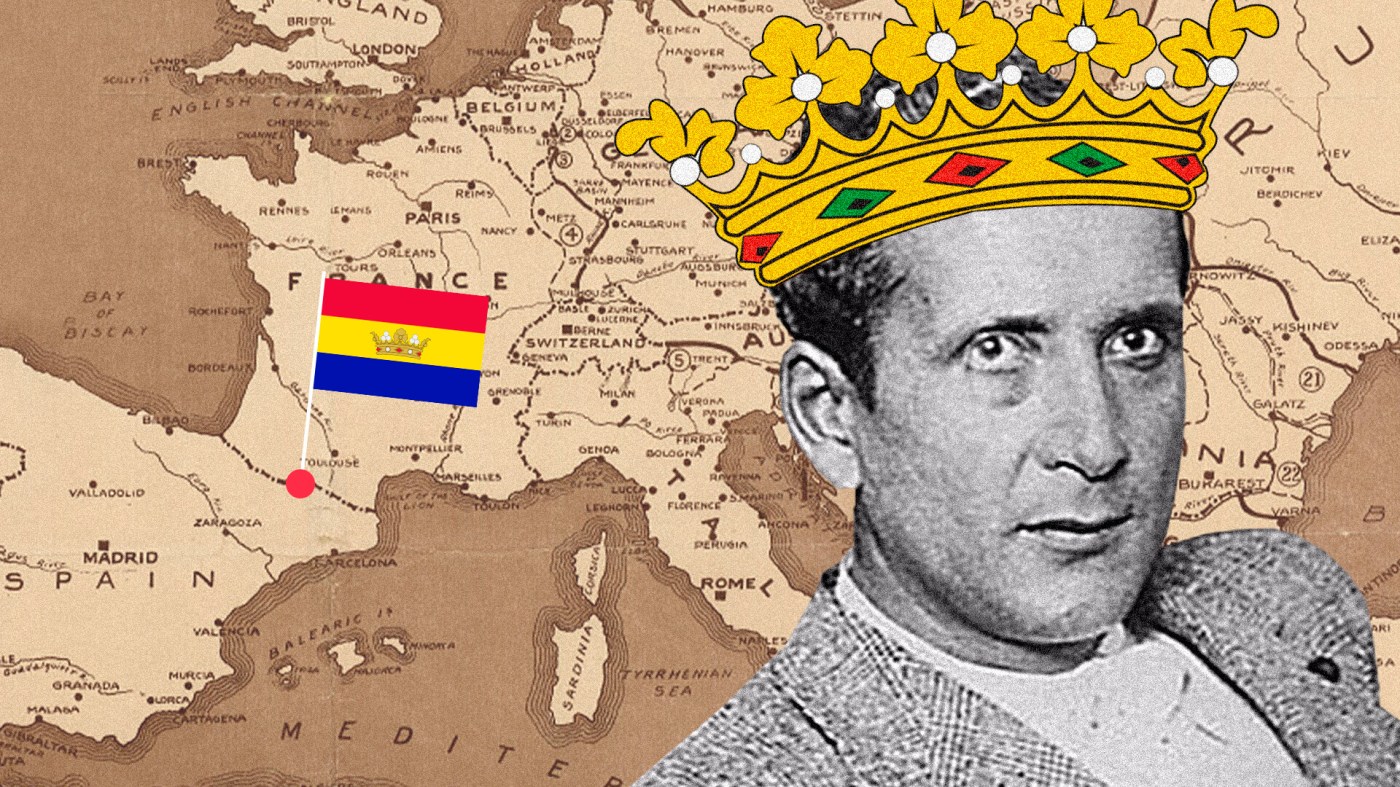
The fraudster and swindler who almost talked his way into becoming king of a tiny mountain realm, armed with a catalogue of lies and a manifesto for modernisation
To be a vocational swindler, fraudster, conman, trickster, scam artist, is to be someone typically unconscionable; someone who is successful in one’s lies by telling them with such complete audacity and confidence that ‘you couldn’t make it up’ and are thus believed. Boris Skossyreff was one such person. He did it so well he almost got himself crowned as king of a European nation-state.
The verifiable facts of this man’s life are hard to ascertain but Skossyreff apparently hoodwinked all and sundry from his earliest days of adulthood. This Belarusian adventurer was born in Vilna to minor nobility, 1896 in what was then the Russian Empire. In 1917 at the outbreak of the Russian Revolution, he sought political asylum in Great Britain, served in the British Army for a couple of years of WWI, then worked for the Foreign Office as a ‘secret agent’ of sorts, being sent on assignments in Siberia, Japan and the USA where his superiors noted his gift for languages which made him great at networking and making friends around the world. Skossyreff then moved to the Netherlands in 1925.
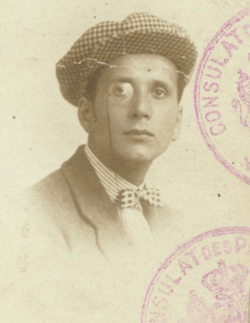
Throughout these early years, Skossyreff worked diligently to create a false image of himself as a man with all the social connections and credentials of a European aristocrat. He introduced himself as ’Baron Skossyreff’ and claimed to have attended the prestigious Lycée Louis-le-Grand school in Paris, followed by Magdalen College, Oxford and was a childhood friend of King Edward VIII. He also claimed he had worked in the Dutch Royal Household and was rewarded for his services by being bestowed the title Count of Orange by Queen Wilhelmina. All nonsense. In fact, following World War I, Skossyreff was mentioned in multiple newspapers for writing fraudulent cheques and swindling a gold watch. Plus, the Dutch Intelligence Service had him on a list of prominent foreign revolutionaries as an ‘international swindler.’ Yet, Boris would later show his talent for making a name for himself by courting publicity and if one throws enough of the brown, smelly stuff around them some of it will stick.
In 1932, Skossyreff registered as “Boris de Skossyreff: import – export, representation” in Santa Marta, Colombia. During this period, he learned Spanish which he would soon make good use of.
It seems the aristocracy bug had bitten Skossyreff; it seems he wanted the trappings of royal power and privilege and so this scoundrel embarked on a bold enterprise to bag a crown of his own. He wouldn’t be able to pull the wool over the eyes of the political establishments of Europe’s major nation-states, of course, so he’d have to try his hand in a country a little more… parochial.
Nestled amidst the snowy peaks of the Pyrenees and squished between Spain and France lies the Principality of Andorra. A little larger in the 1930s than today, it nevertheless had a population under 6,000 and you could trek across the breadth of it in half a day. For all of its qualities, it was an isolated and rustic nation, its people living simple pastoral lives in the mountain valleys. Andorra also has a unique system of constitutional government whereby its Head of State is held by two ‘Sovereign Princes’: The Bishop of Urgell in Spain and the French President. Its day-to-day government, the Council of the Valleys, consisted of just 24 members.

Boris Skossyreff slithered into Andorra sometime in early 1934 and started sounding out the Andorrans with an enterprising ear. Be it talking to politicians, peasants or artisans, Skossyreff wanted to get an idea of the concerns and hopes the people had for their country. Boris talked extensively, making connections and getting his face known around as his plan for a coup was formulated. Then, on the 17th of May 1934, flaunting his aristocratic titles of ‘Baron Boris’ and ‘Count of Orange’, he approached the Council of the Valleys and, basically, said: ‘You know what? You should let me be your ruler and here’s a load of ways I’d improve your country if you did.’ Some Council members ridiculed the man with the words: “…he should not meddle in political affairs in the Valleys.” With that, Boris retreated to the Hotel Mundial, three miles (5 km) from the border in Spain.
Boris now took stock to restrategise. He had a lot of contacts in the media and started doing many interviews to promote himself with big newspapers such as The Times and The Daily Herald so that when he did proclaim himself king, it would appear in the mainstream media around the world. How did Boris have any success at all with this absurd and audacious venture?
Firstly, Boris scraped the barrel of legitimacy by claiming that, technically, the French co-prince of Andorra was the King of France and not the President of the modern republic. He contacted the modern descendent of the French king, Prince Jean d’Orleáns to affirm his legitimate claims to the French Kingdom and, with his supposed aristocratic credentials, that ‘King Boris’ could subsequently be the French king’s regent in Andorra …somehow. Secondly, Boris’ proposals for change were shrewd. Levels of prosperity in this pastoral nation were stagnant, plus the Andorrans were very disgruntled about the lack of suffrage they had; in 1933, a group of young men locked themselves in protest in the Casa de la Val, the former seat of Andorra’s parliament, to demand universal suffrage for men over the age of 25 because only heads of families could vote. Boris’ approached the Council of the Valleys once more with formal proposals to expand political, ideological, religious and press freedoms, and establish a hospitable tax regime to coax banks, casinos and transnational companies into establishing themselves in what could become one of the world’s major business hubs. This braggart proved to be a visionary. Many of the suggestions he made to get Andorrans on his side — opening the country to foreign investors, opening a casino, plus building a ski resort — would see the light of day many years later. With the added inducement of a bribe, financed by Boris’ mistress – American millionaire Florence Marmon, legend has it that, on the 8th of July 1934, 23 out of 24 Council members voted him in as their King. This mass agreement may be exaggerated, yet Boris had printed and distributed 10,000 copies of his constitution, and had garnered support in high places in those mountains, for sure. ‘King Boris I’ then declared war on the Bishop of Urgell, claiming to have 500 men at his bidding.
Thirteen days later, the Bishop retorted with an arrest warrant, and Spanish Guardia Civil sent three constables and a sergeant to arrest him. He was taken with a handful of supporters to Barcelona then onto Madrid.
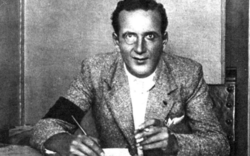
And that was that. Clearly Boris’ bold move would never be tolerated by both the Spanish and French governments and much of Boris’ initial support drained away as his lies began leaking out. The Russian emigre’s panache for promotion made it headline news across the world, however, with few having even heard of Andorra before.
Boris appears to have escaped serious judicial consequences for his capers in the Pyrennies valleys, but he faced many years of tribulation. He would be arrested in France, Portugal, then France again as an anti-fascist in 1939. Boris was further arrested for collusion with the Nazi’s post-WW2 before a further 10 year stint in the Russian gulags. In 1956, this would-be king moved to West Germany to live out his days.
How do you imagine the Andorrans initially felt about Boris’ bold proposals to become their king? Comment below!
 History and Things
Leave a comment