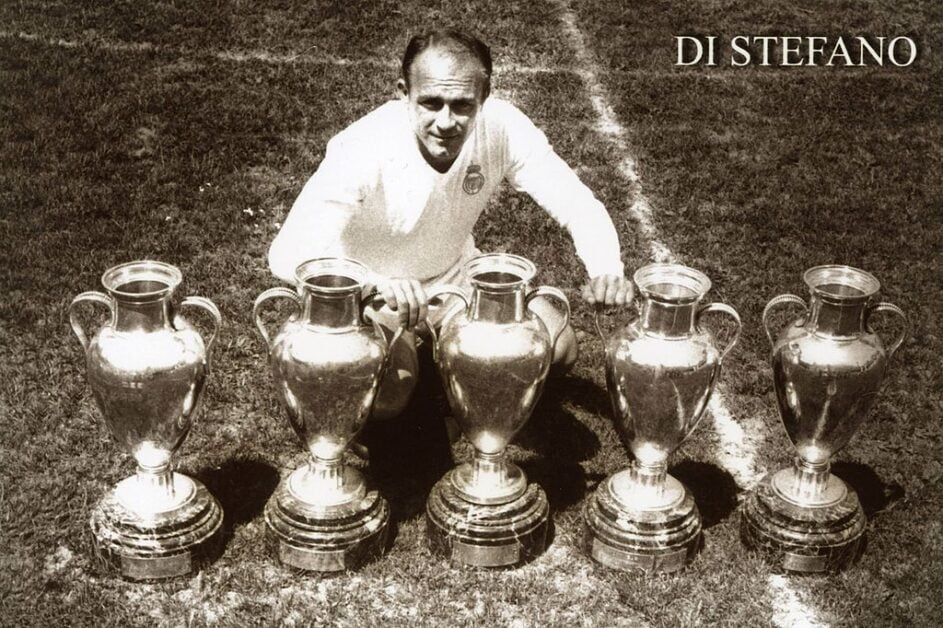
The greatest football teams based on consecutive championships, unbeaten runs, and international titles to prove their claims to have been the best of their times
19th Century
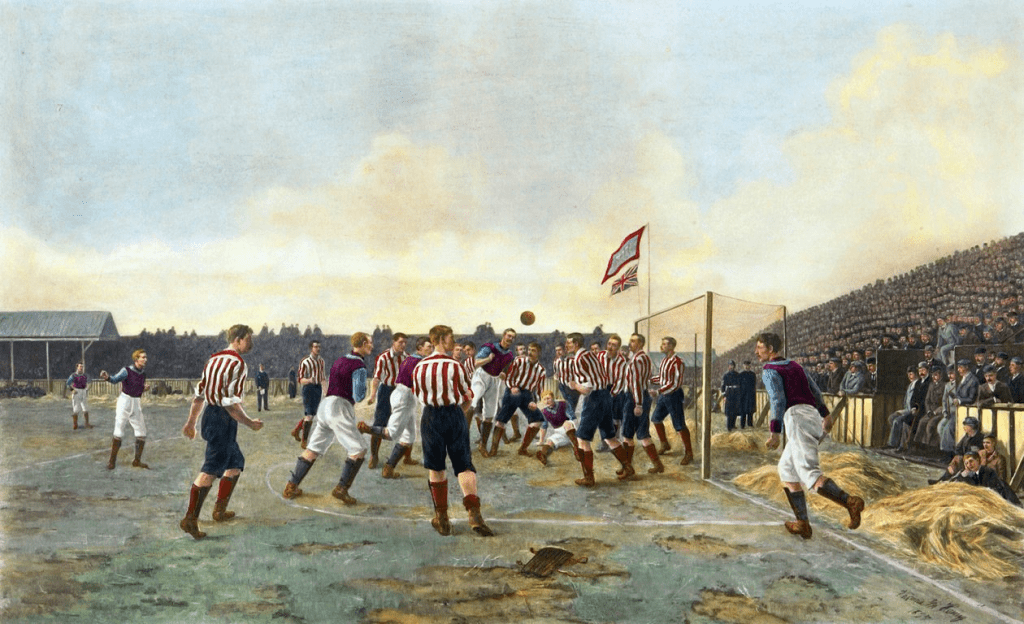
The world’s first official national-level competitive football began in England and Scotland in 1872 and 1873, respectively. As such, the world of football until the 1890s was about as global as the World Series and remained about 80% centred in the British Isles until the 20th Century. Subsequently, Scotland and England’s earliest cup winners and league champions, despite their amateur set-ups, could be regarded as the best clubs in the world …and this was especially the case with Queens Park.
Queens Park FC
In the early 1870s when football tactics were very rudimentary, it was Scotland’s Queens Park FC who developed the concept of passing the ball rather than just running with it and this was termed the ‘Combination Game’. This made the Spiders the no.1 club. Queens didn’t actually concede a single goal in their first three seasons – mostly friendlies plus the inaugural Scottish FA Cup campaign. Queens Park won the first three SFA Cups in a row with a 42-4 goal scoreline between 1873-1876. They went on to beat English club Wanderers FC 6-0 to win the inaugural ‘Football World Championship’ of 1876 to cement their credentials as the world’s best.
Sunderland AFC
Many so-called ‘scotch professors’ crossed the border into England and helped a number of clubs reach new heights, including the ‘Black Cats’. Manager Tom Watson was successful at Sunderland due to his penchant for recruiting Scottish players, including striker John Campbell. This ‘Team of all Talents’ won the 1891-92 English Football League, then the next season won it by 11 points. Sunderland could only make runners up in ‘94, but the season after they won their third championship. Campbell was top scorer in all three of these seasons whilst they were stingy at the other end too; goalie Ned Doig kept clean sheets in 30% of all his games. With Sunderland’s dominance of the English league, they also beat their Scottish counterparts three times, including Hearts in 1895 after which they were pronounced: ‘Champions of the World’.
Early 20th Century
Genoa CFC
Genoa CFC was founded as a cricket and football club for English expats only. But it was to this club that English missionaries of the fledgling ‘Beautiful Game’ subsequently arrived, and with them, more refined concepts of management and tactics. They made The Griffin an unbeatable team around the turn of the 20th Century as they competed in the earliest league championships. It’s worth noting the first few editions of the Italian Football Championship were small affairs with less than five teams competing. Nevertheless, with manager/goalkeeper/defender James Spensley at the helm, Genoa were crowned champions for six out of the first seven seasons, between 1898-1904.
Glasgow Rangers
Rangers had a remarkable period that set them well on the way to becoming one of Scotland’s two Old-Firm giants. In 1898-99, their team won the Division 1 title by winning all 18 of their games – a ‘perfect season’! Striker Robert Hamilton banged in 25 goals in that campaign, a player noted for his remarkable long-range accuracy. Hamilton helped Rangers win the following three championships also.
Royale Union St Gilloise
Les Unionistes took the reins as the best team in the Benelux-northern France region by winning six out of seven championships between 1904-1910. This included an unbeaten run of 18 games then an incredible 22-game streak resulting in two ‘invincible’ seasons between 1905-1909. St Gilloise also dominated on the international stage by lifting three Challenge International du Nords and three Coupe Van der Straeten Ponthozs between 1904-1907.
FC Nürnberg
Founded in 1900, by 1909 Nurnberg achieved complete dominance as they rose up the German regional leagues, becoming known simply as Der Club on account of the team going unbeaten in 104 official matches from July 1918 to February 1922, utilising a slow, deliberate style which allowed them to shut out their opponents. Nurnberg subsequently seized the first two post-war German Championships, including a 5-0 victory against BFC Vorwärts 90 in the 1921 Final.
Torino FC
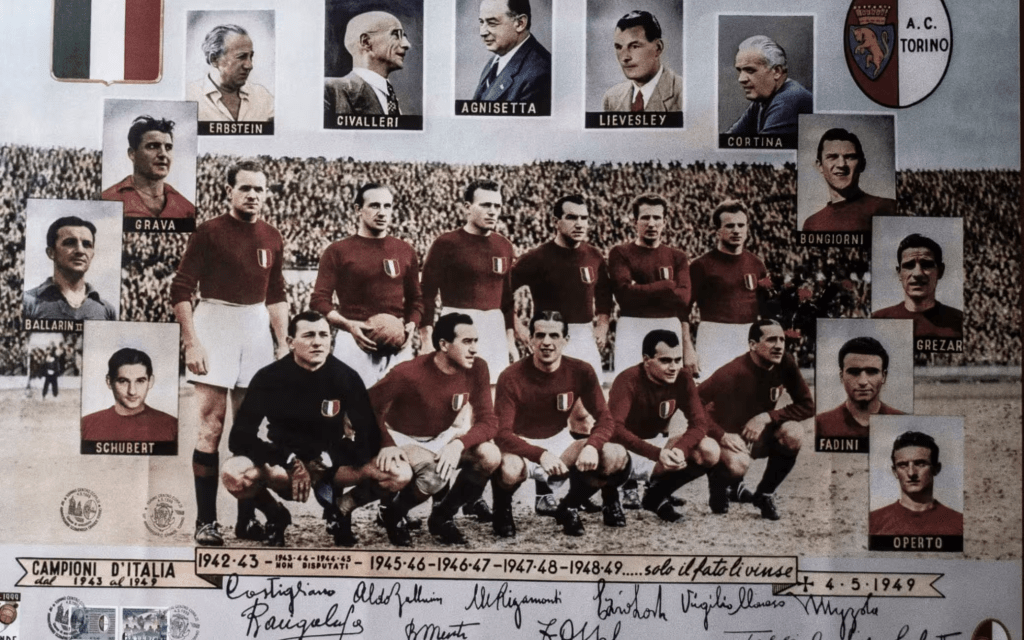
Perhaps the first team to be confidently regarded as the best in Europe since Queens Park FC was the Grande Torino squad of 1942-1949. Torino adopted the ‘Sistema’ style of play in the ‘30s and bought in players like playmaker Valentino Mazzola. With this, Torino achieved the Scudetto-Coppa Italia ‘double’ in 1943 then, with a break for WW2, won four consecutive league titles including the 1947-48 championship by 16 points. Torino’s players formed the backbone of the Italy national team in this period, at one point fielding ten players simultaneously in the Azzurri. Their supremacy sadly ended with the Superga Air Disaster.
Late 20th Century
Real Madrid CF
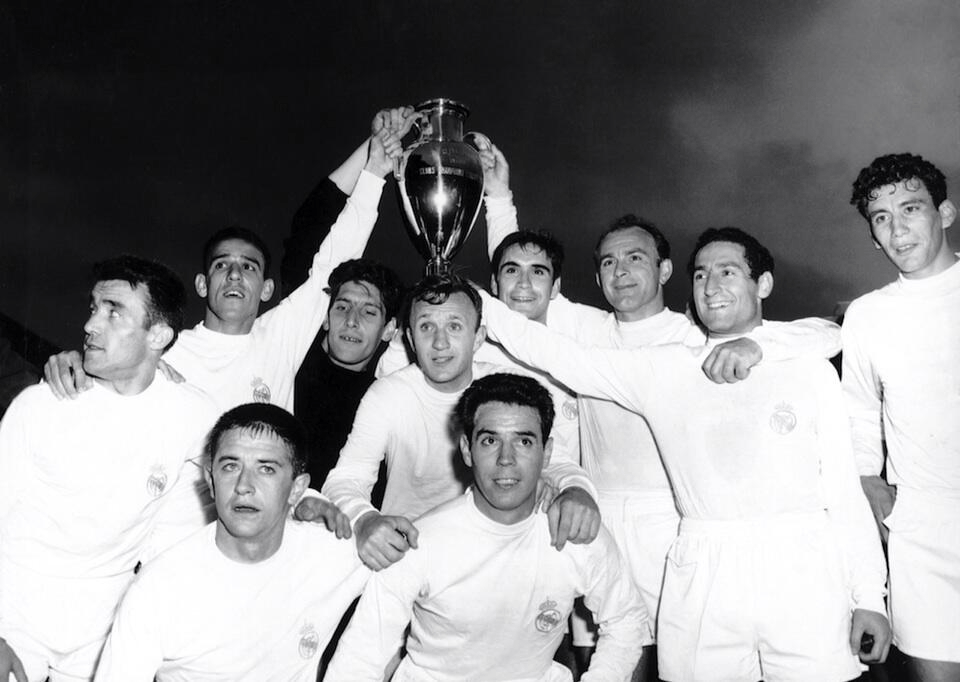
As arguably the biggest club in the world, Real Madrid have revelled in many great periods of success. In the 1950s Real Madrid founded its cantera youth academy and began a policy of buying up the best galacticos in the world, players like Alfredo Di Stéfano and Ferenc Puskás. The result was an amazingly long period of 15 years from 1954 – 1969 when Los Blancos held the Spanish and/or European crowns each season. This included: Consecutive ‘European doubles’, 1957-58; five consecutive European Cups, 1956-1960; five consecutive La Liga titles, 1961-65; and the inaugural Intercontinental Cup in 1960.
SL Benfica
The Eagles took the mantle of Europe’s best team between 1960-1965. Led by coach Béla Guttmann, Benfica won five out of six Primeira Divisao titles and two back-to-back European crowns, including being both European and Portuguese champions in 1960-61 as well as Portugal Cup-Euro Cup holders the season after. The legend Eusabio joined in 1961 to push Benfica on to be hailed the top team in Europe, winning the France Football European Team of the Year award in ‘68.
Celtic FC
The Hoops showed in the 1960s that they weren’t just an all-domineering team in Scotland, but could be the best in Europe. Jock Stein took charge in 1965. He was known as a visionary ‘tracksuit’ manager who played adventurous, attacking football. With this team, Celtic won nine consecutive league titles from 1966-1974 during which Celtic also lifted 10 domestic cups. Yet, Celtic’s crowning achievement was to overcome Inter Milan 2-1 in the 1967 European Cup Final to complete a fabled ‘quadruple’ of major trophies that year. It was Celtic’s annus miribalis.
AFC Ajax
Dutch giants Ajax displayed total dominance at home and abroad in the ‘60s and ‘70s when Rinus Michels created ‘Total Football’. This tactic set up every outfield player’s position to be totally fluid in order to create attacking opportunities in an instant while the opposition chased shadows. Johan Cruyff, regarded as the greatest Dutch footballer of all time, joined the club in 1959. Ajax’s evolutionary football was proven superior between 1966-1973 with seven out of eight Eredivisie championships and three consecutive European Cups. Their crowning achievement was the 1971-72 season: five trophies up for grabs; five triumphs – the European Treble as well as the (unofficial) UEFA Super Cup and Intercontinental Cup.
Liverpool FC
During a particularly competitive period in the English Division 1 when a team needed to be playing the best football on the continent in order to win the league, the Reds dominated home and abroad with a dream-team of coaches dubbed: ‘The Boot Room’, formed by Bill Shankley. Liverpool stood as European and / or English champions between 1976-1984. Highlights include: Winning the 1982-83 Division 1 season by 11 points; winning the ‘European double’ plus UEFA Super Cup in ‘77; achieving the ‘European treble’ in 1984.
FC Steaua București
The Red and Blues had arguably the most impressive run of form in this whole list. Steaua won the Romanian Division A in the 1984-85 season then remained champions for the next four seasons. Astonishingly in the final three of these, Steaua went unbeaten at home in both the league and cup – that totalled 117 games. And to show the world how formidable the team from Bucharest were, they conquered Europe. In the 1985-86 European Cup, Steaua reached the final to come up against Barcelona as clear underdogs. Yet in the penalty shootout, goalkeeper Helmut Duckadam saved all four penalties. Steaua then won the 1986 UEFA Super Cup.
21st Century

FC Barcelona
Barcelona had always been big players on the Spanish stage, their impact abroad was more modest. That was before Lionel Messi joined in 2004 and ex-player Guardiola took command in 2008. Guardiola created his own brand of ‘Tiki-Taka’ style of quick-passing football that beat all-comers. Between 2009-11, Barça were La Liga champions for three years, winning the 2008-09 campaign with three games to spare and a +70 goal difference. Pep’s style of play was unbeatable. In 2009, Barcelona achieved the first ever ‘treble’ topped by UEFA Super Cup and Intercontinental Cup victories. In 2011, Barcelona beat Man United 3-1 to achieve the ‘European double’.
FC Bayern Munich
In the highly commercialised football industry of the 21st Century, Bayern Munich used their financial muscle to put a stranglehold over the German Bundesliga with stars like Ribery, Muller and Manuel Neuer by winning a staggering 11 championships in a row between 2013-2023, including the 2013 Bundesliga crown with six games to spare. Die Bayern also proved their mastery over the global stage by winning every trophy bar the German Super Cup in 2013, and achieving the almost unheard-of ‘sextuple’ in 2020.
Paris Saint Germain FC
Founded only as recently as 1970, it is hard to look past the fact the club’s nation-state owners have done little more than buy their dominance over French football, but they’ve clearly spent well. Between 2013 and 2025 Les Parisiens won 12 of 14 Ligue 1 titles. Plus, they achieved no less than four ‘domestic trebles’ which shows remarkable consistency. In the 2024-25, PSG reached new heights by thrashing Inter Milan 5-0 in the Champions League Final, followed by lifting the UEFA Super Cup then FIFA Intercontinental Cup to cement their credentials as a force to be reckoned with across Europe.
Can you think of any other all-conquoring clubs that should be on this list? Comment below. Thanks!
 History and Things
Leave a comment